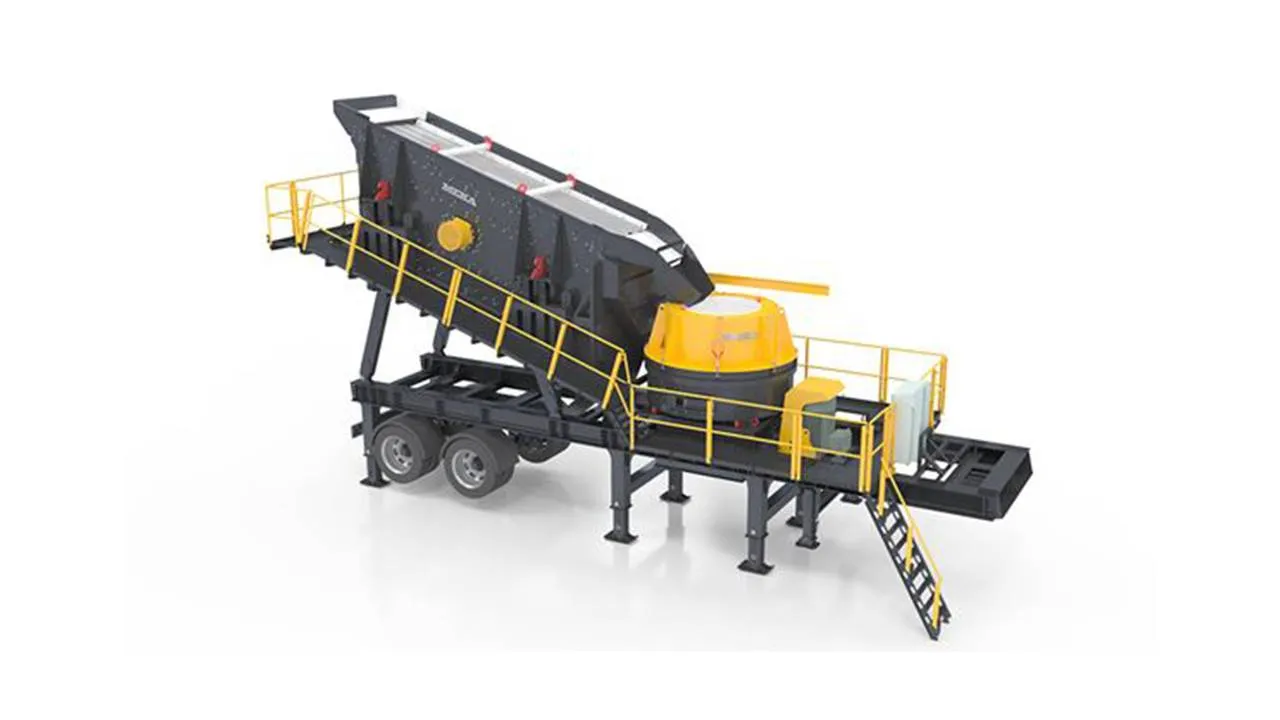
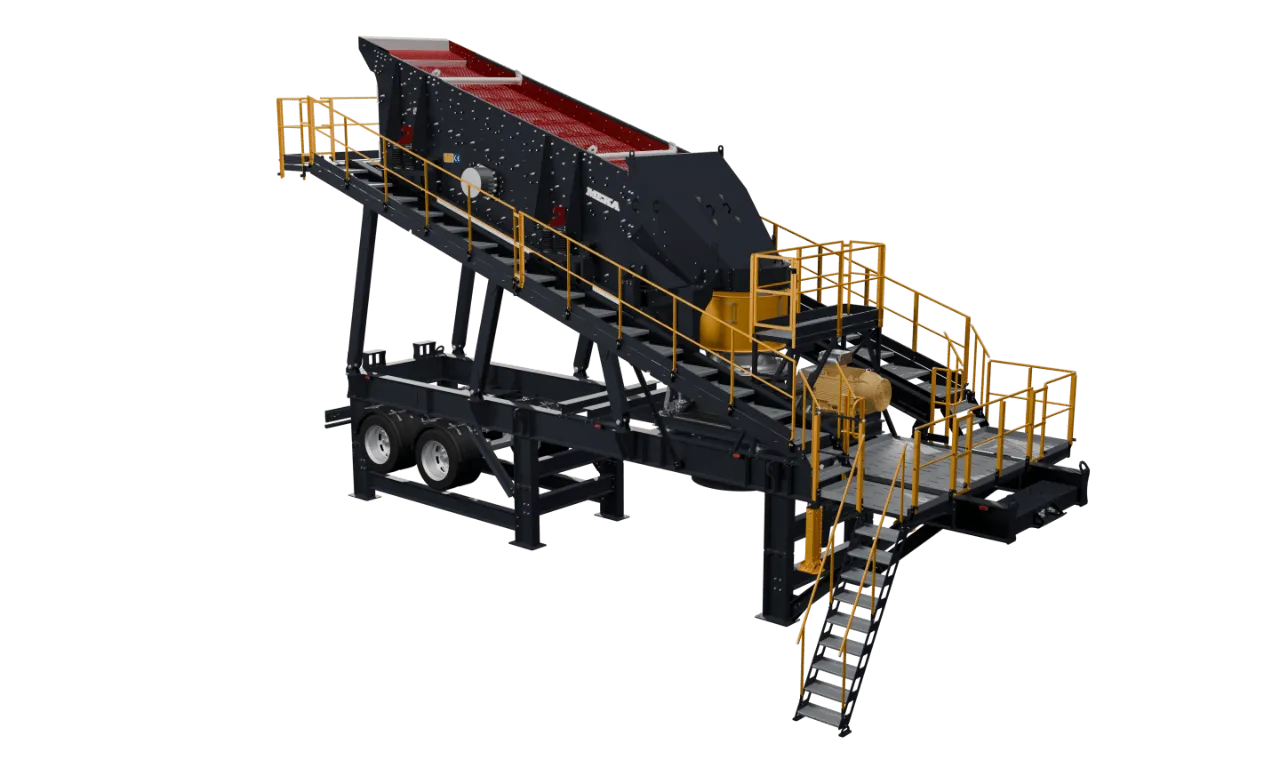
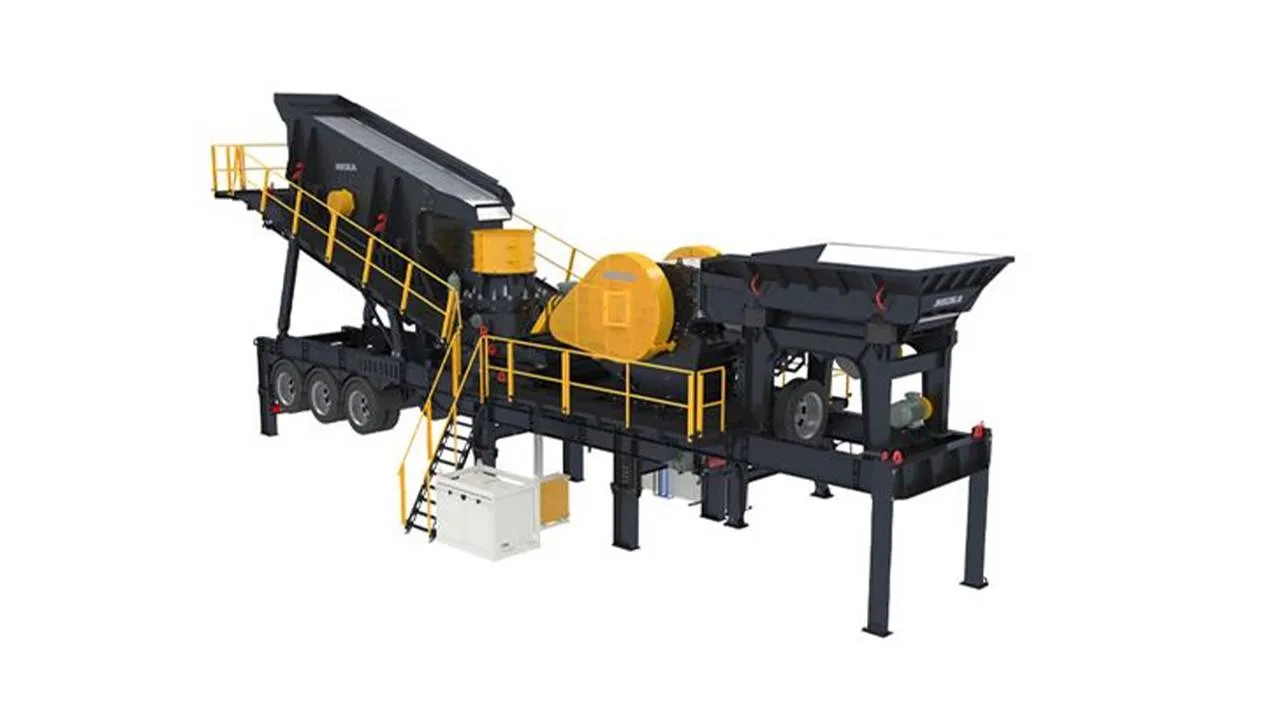
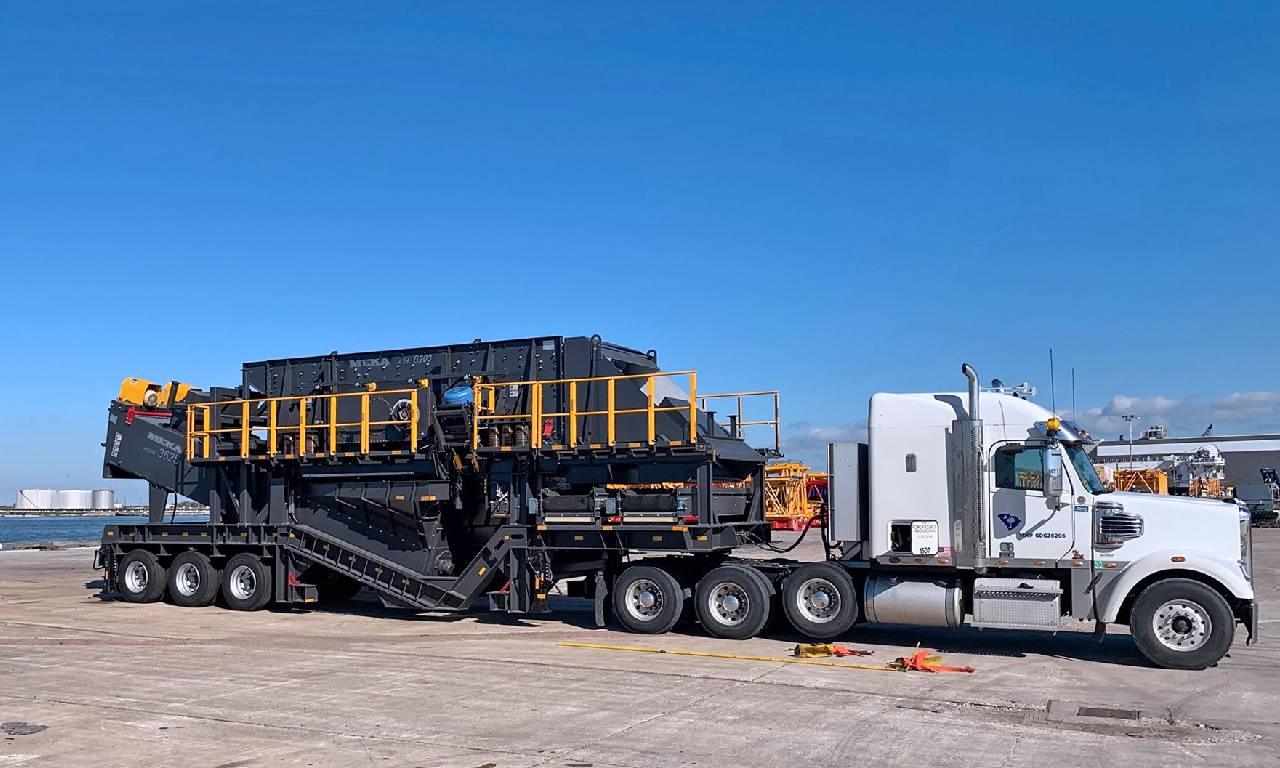
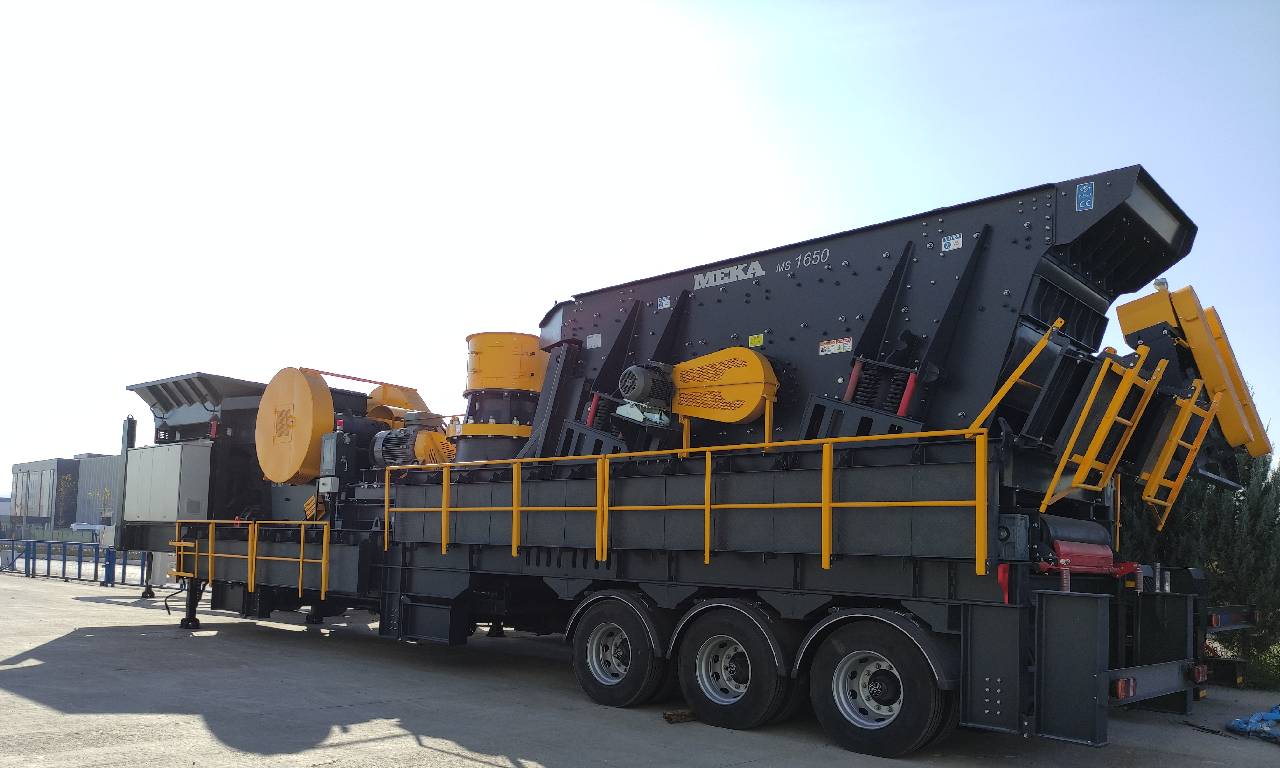
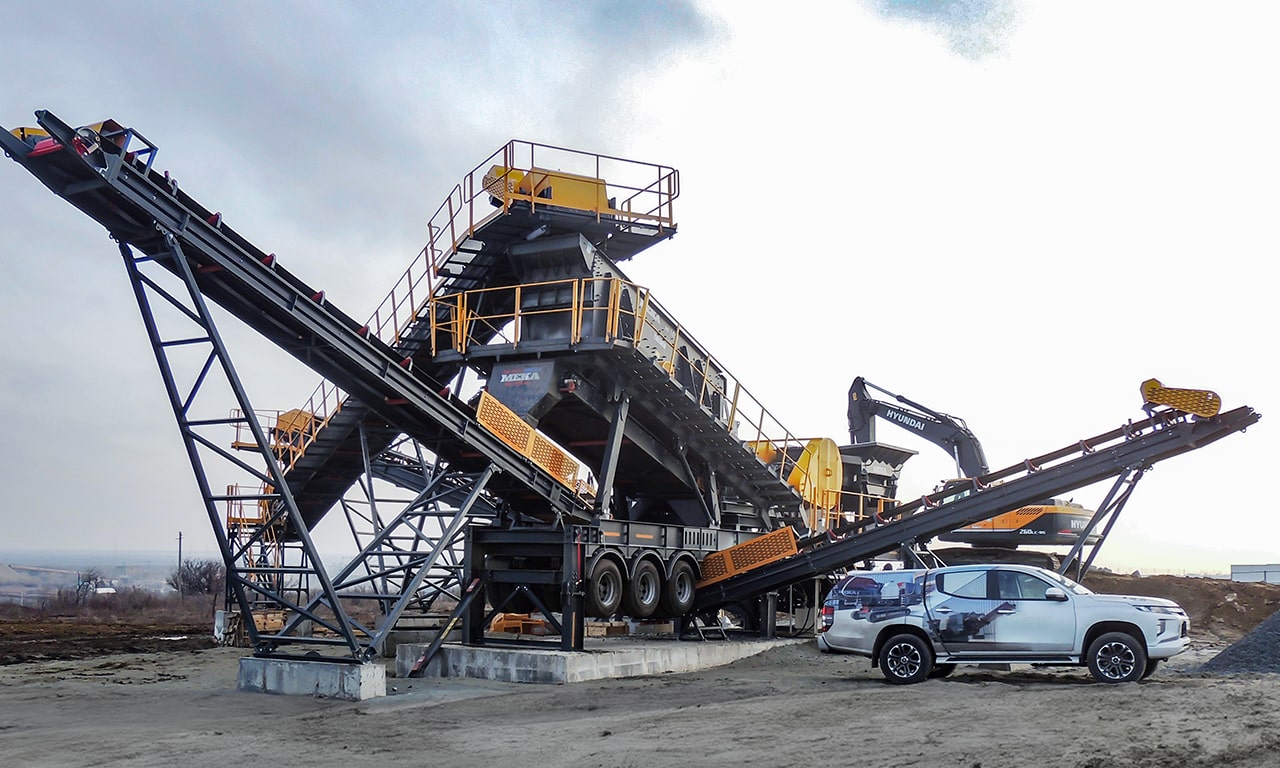
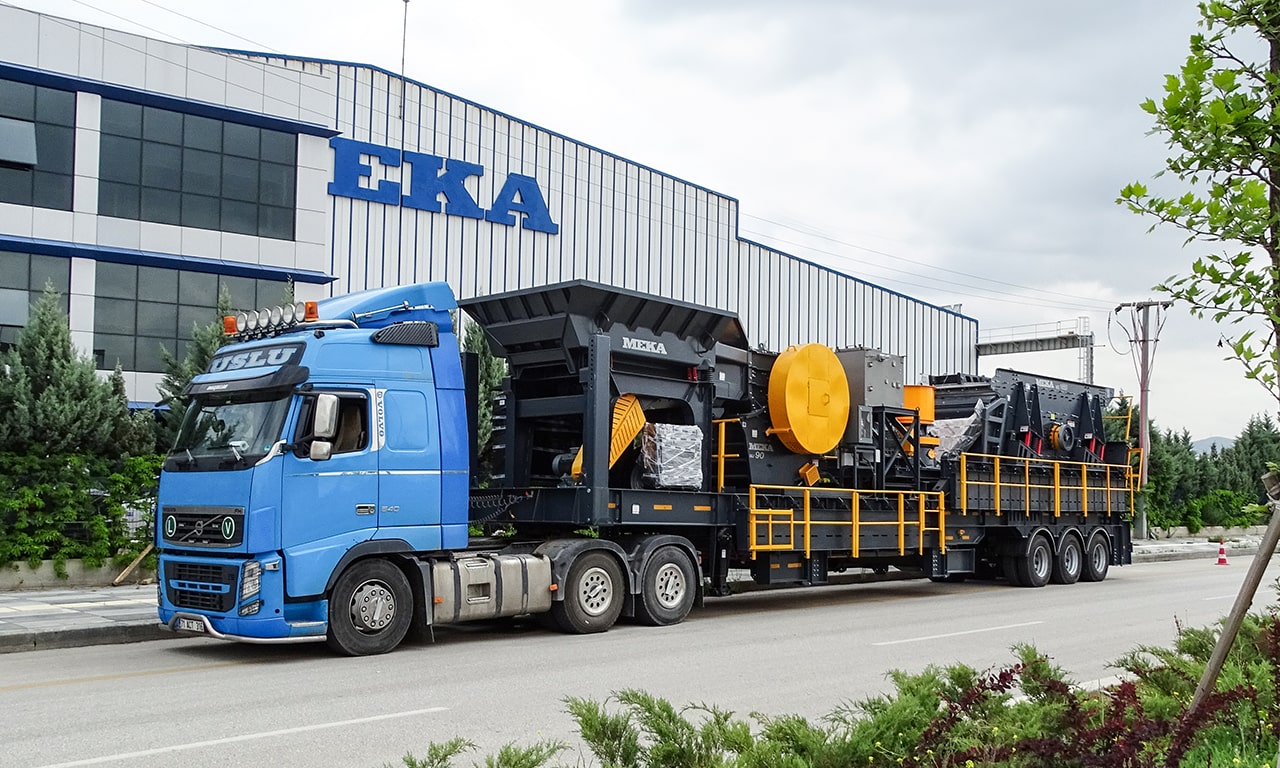
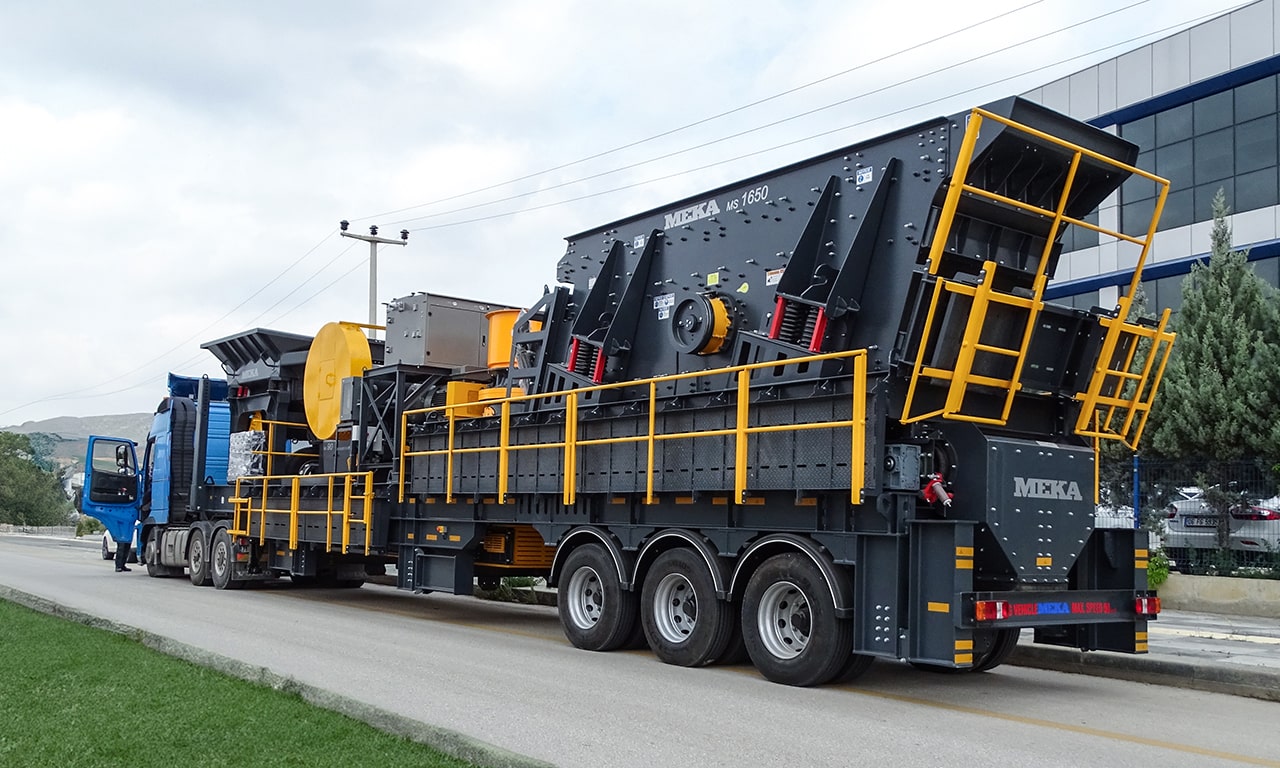
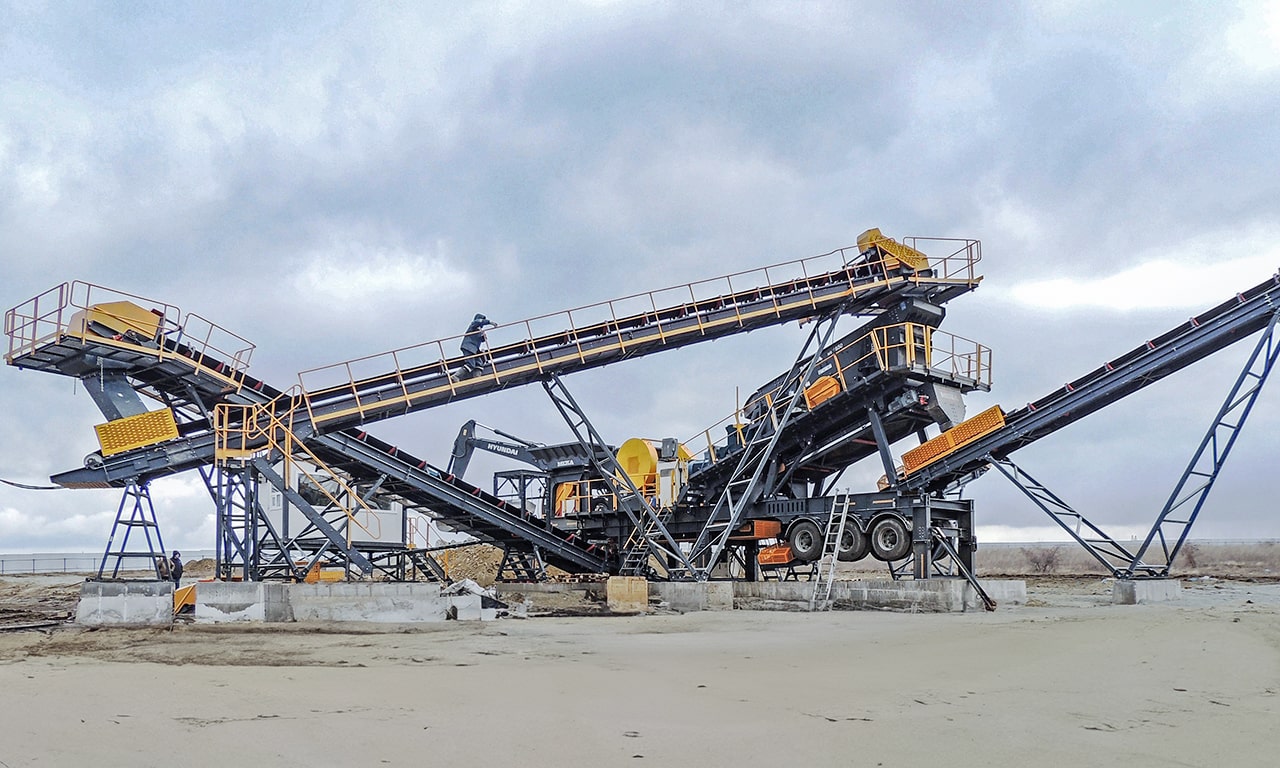
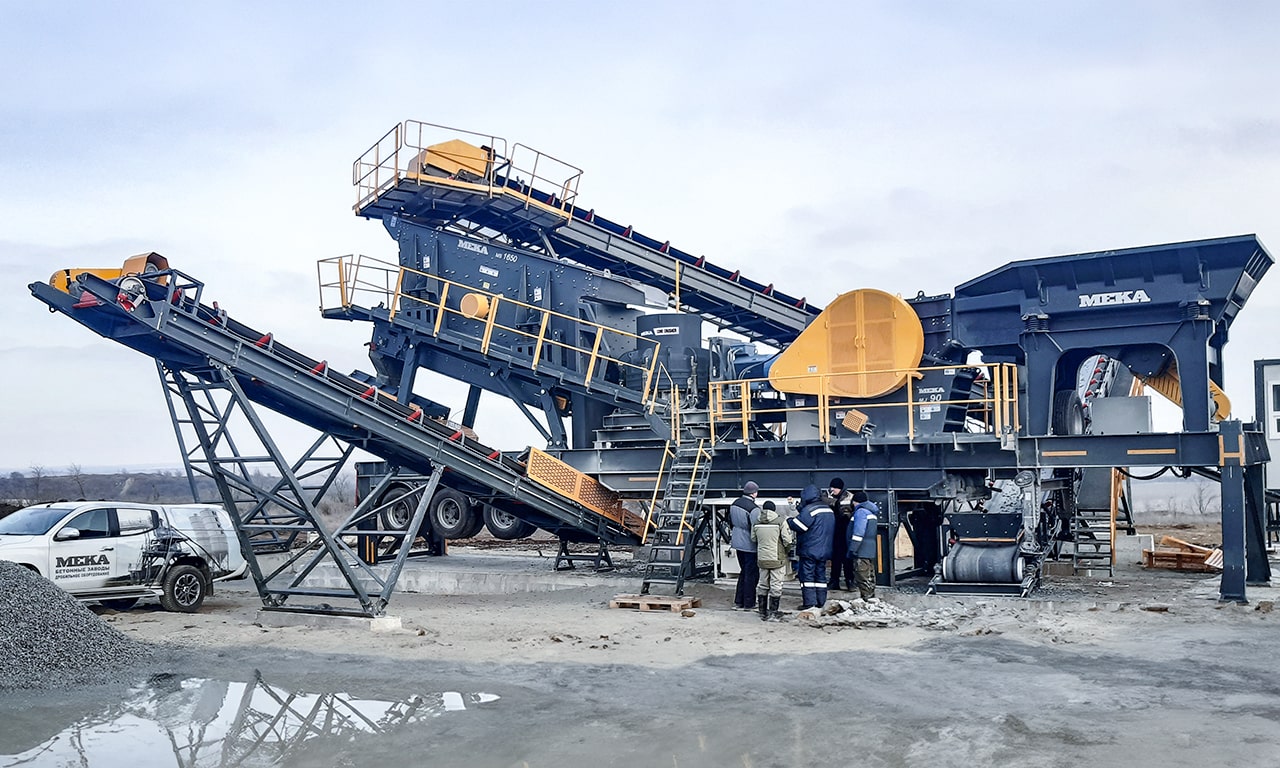
A mobile crushing and screening plant is a crushing unit, or a train of units, mounted on a chassis that can be relocated between sites without permanent civil infrastructure. Rather than pouring foundations, erecting structural steelwork, and connecting permanent power supplies, the plant arrives on a trailer, sets up in hours, and can be moved again when the job is done.
The term "mobile" covers the broadest category: any plant designed to move. Within that, portable (wheel-mounted) plants travel on road-legal trailers towed by a standard truck. They connect to grid power on site, require minimal ground preparation, and can be reconfigured by adding or removing units from the train. A mobile crushing plant in this format is often the lowest total-cost-of-ownership option for operations that need to move periodically but stay in one place long enough to justify proper electrical connection.
Mobile vs. Stationary: When Does Mobile Make Sense?
A stationary plant offers the lowest operating cost per tonne at high volumes over a long reserve life. It also offers the most flexibility in circuit design and the highest throughput ceiling. For quarries with high annual production rates and long reserve lives, stationary plants often provide the lowest cost per tonne over the long term.
Mobile makes sense when one or more of the following conditions apply:
The site is temporary. Road projects, dam construction, railway ballast supply, and large infrastructure contracts all require aggregate on location for a defined project duration, then the equipment must move on.
The reserve life is shorter. Smaller quarries with 5–10 years of viable reserves rarely justify the civil investment of a stationary plant. A portable plant is paid for by the operation, then redeployed or sold.
Multiple sites need to be served. Contractors operating in several locations simultaneously, or sequentially, benefit from units that can be repositioned as workloads shift.
The material is at the point of use. Concrete and asphalt recycling often happens at the demolition or road rehabilitation site. Trucking rubble to a stationary plant and then trucking aggregate back is a poor economic choice. A mobile crusher brings the reduction to the material.
Capital is constrained. The lower civil cost of a portable plant reduces the initial capital requirement, even if operating cost per tonne is marginally higher than a stationary equivalent.
Wheeled vs. Tracked Mobile Crushers
Two main chassis types exist in the market for mobile crushing and screening:
Tracked (crawler-mounted) units move under their own power on site and require no external tow vehicle for repositioning within a quarry face. They set up quickly, work on rougher terrain, and are genuinely self-propelled. The tradeoff is higher capital cost, higher transport complexity (typically requiring a low-loader), and fuel consumption for the onboard diesel engine.
Wheeled (portable) units travel on road-legal trailers, set up and break down rapidly, and connect to grid electricity on site. They are not self-propelled but are towed between locations by a standard truck, which most operations already own. Once on site with a power connection, they run on electrical power: lower operating cost, lower emissions, and no onboard diesel fuel consumption during production in locations where reliable grid power is available.
When does wheeled win? For most quarry, aggregate, and fixed-duration infrastructure operations, wheeled portable plants deliver a compelling combination: road-legal transport subject to local transport regulations and axle-load requirements, fast site-to-site relocation, connection to the grid's lower-cost electricity, and the ability to expand capacity modularly by coupling additional units. For operations that stay at one location for weeks or months at a time, rather than relocating daily within a quarry face, wheeled portable plants typically offer the lower total cost of ownership.
MEKA's portable range is entirely wheel-mounted, designed specifically for these applications: quarries, aggregates, road projects, limestone operations, sand and gravel, and recycling where the site duration justifies an electrical connection.
Types of Mobile Plants by Crusher
Mobile Jaw Crushers (Portable Jaw Crushers)
The mobile jaw crusher, represented in MEKA's range by the Portable Jaw Crusher, is the standard choice for mobile primary crushing of hard rock. As a complete mobile rock crusher solution, it allows operators to perform primary size reduction close to the extraction point, reducing material handling requirements and improving site efficiency.
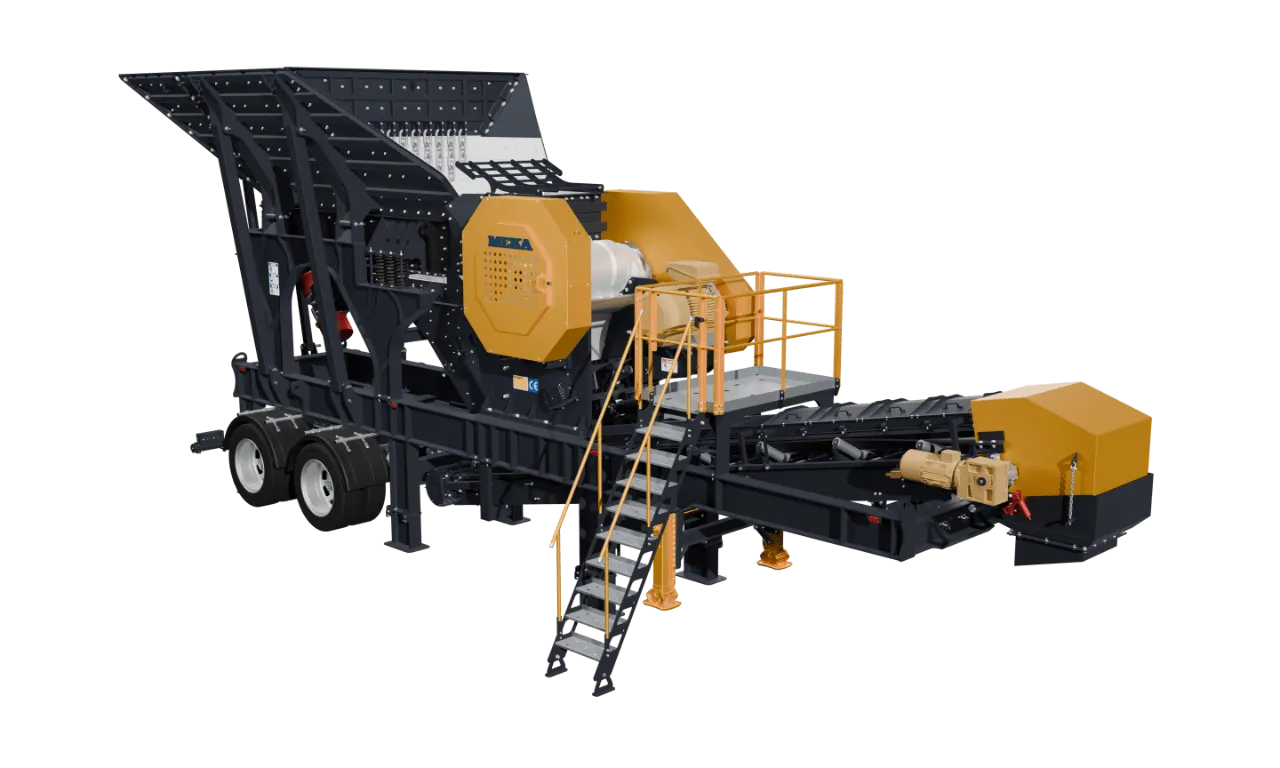
Each Mobile Rock Crusher unit is fully assembled on a single trailer frame, incorporating a grizzly feeder, a jaw crusher, and a discharge conveyor. The electrical switchgear cabinet can be positioned on the ground during operation for easier access and installation flexibility.
Portable jaw crushers are suitable for granite, basalt, limestone, recycled concrete, and virtually any hard or medium-hard primary feed. A mobile jaw crushing plant is typically used as the first stage in multi-stage portable crushing circuits, providing a reliable feed preparation solution for secondary and tertiary processing.
Mobile Impact Crushers (Portable HSI Crushers)
Horizontal shaft impact (HSI) crushers provide higher reduction ratios and improved product shape compared with jaw crushers when processing softer and less abrasive materials such as limestone, dolomite, and recycled materials.
MEKA offers three portable HSI variants:
Portable Primary Impact Crushers combine a high-stroke grizzly feeder with a primary impactor for flexible open-circuit or standalone operation. Heavy-duty double breaker plates and a hydraulically opened frame make these units suitable for limestone quarrying, cement raw material production, and concrete recycling.
Portable Secondary Impact Crushers are built around the four-blow-bar secondary impact crusher. Adjustable breaker plates and rotor speed control allow a wide range of output gradations. They are typically installed after a primary jaw or impact crusher in two-stage mobile crushing plants, reducing intermediate material into product-sized fractions.
Portable Tertiary Impact Crushers provide final-stage fine reduction and product shaping for applications where a high percentage of well-shaped fine aggregate is required.
Portable Impact Crushing Plants combine the primary impact crusher with an onboard vibrating screen in a closed-circuit configuration, producing multiple classified products from a single trailer-mounted unit.
Mobile Cone Crushers (Portable Cone Crushers)
For hard and highly abrasive materials such as granite, quartzite, and gravel, portable cone crushers are often selected for secondary and tertiary crushing stages. In these applications, a cone crusher provides lower wear rates and more consistent production compared with impact-based crushing.
MEKA's portable cone crusher units are built around the cone crusher and paired with a high-capacity three- or four-deck vibrating screen on the same chassis.
Material is transferred by conveyor from the primary unit (jaw or primary impact crusher), passes through the cone crusher, and is then classified by the onboard screen. Oversize material is returned to the crusher in a closed circuit, while correctly sized fractions are discharged to stockpiles. Hydraulic closed-side setting adjustment and overload protection help maintain reliable operation in demanding conditions.
Mobile VSI Crushers (Portable Vertical Shaft Impact Crushers)
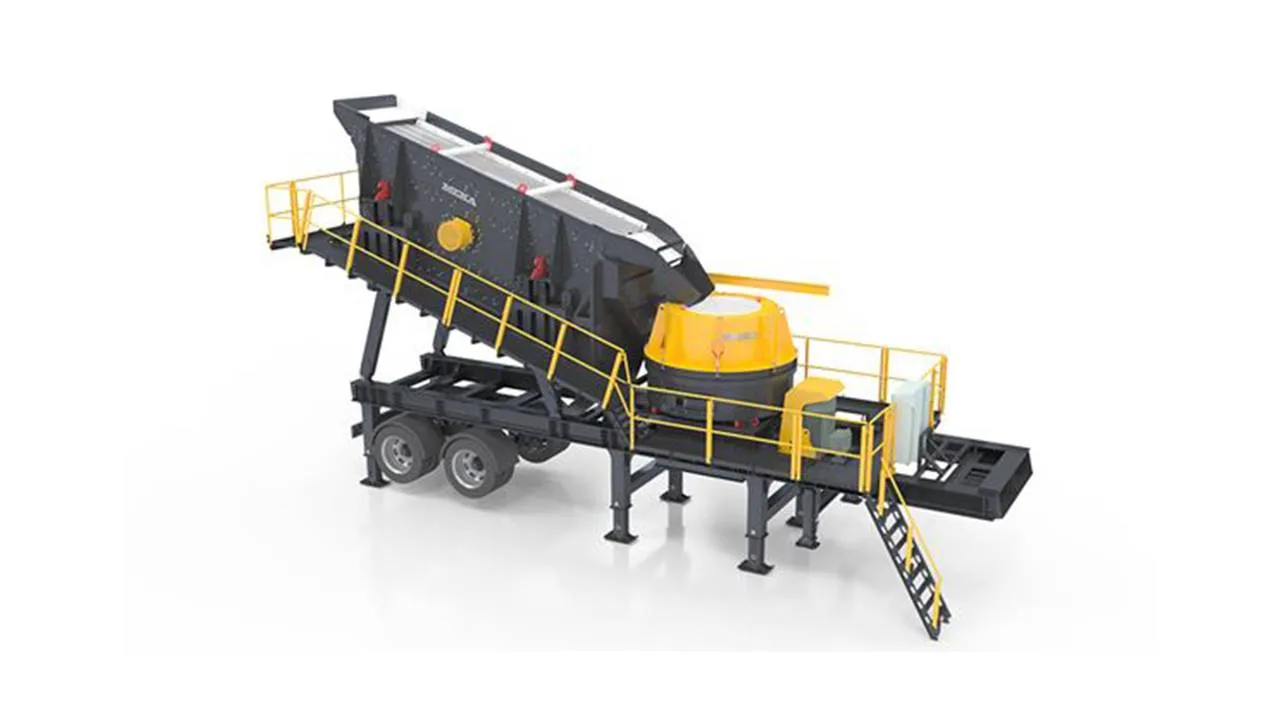
When product shape is a priority, especially for reducing flakiness and elongation in fine aggregate, or when manufactured sand is the target product, a Portable VSI Crusher can be added as the final crushing stage.
MEKA portable VSI units are available with G Model (rock-on-rock) and L Model (rock-on-steel) rotor configurations, combined with a vibratory feeder to handle both hard abrasive rock and softer applications.
VSI units typically operate as the final stage in a three-stage portable crushing train, following a primary jaw crusher and secondary cone or HSI crusher. Depending on the application, they can be integrated into a complete mobile stone crusher setup for producing high-quality aggregate products directly at the job site.
Portable Screens
Not every mobile application requires a crusher. In many cases, mobile screening is enough to separate and classify material that is already within the required size range. Portable screens are commonly used for sizing existing aggregate, removing overburden, or processing naturally graded material from gravel pits and sand deposits.
MEKA's portable screen range includes:
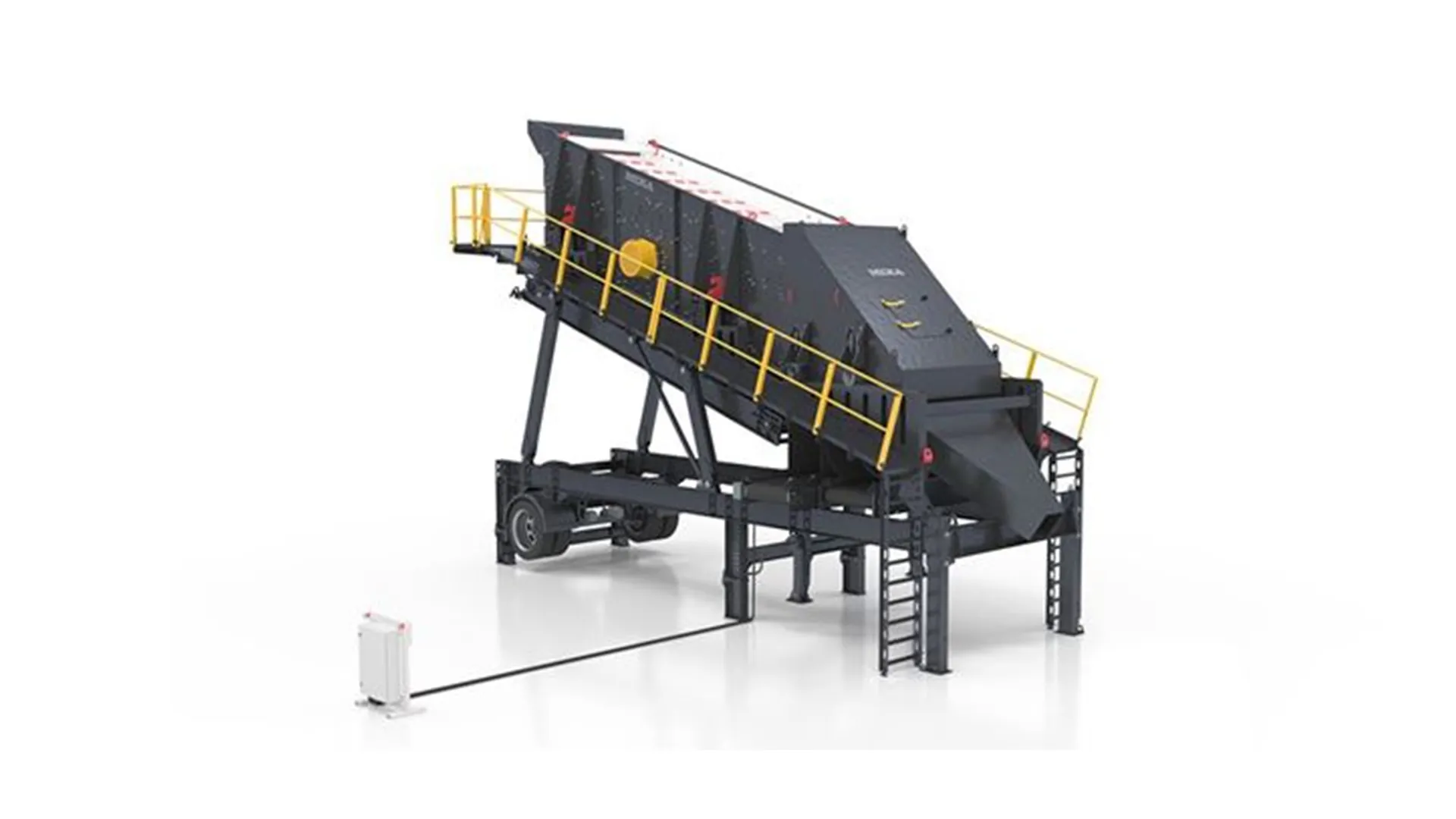
- Portable Inclined Screens for reliable dry aggregate classification across multiple size fractions.
- Portable Horizontal Screens for applications where a compact footprint or specific separation performance is required.
- Portable Screening Plants, complete mobile screening plant solutions that combine a feeder and multiple screen decks on a single trailer for efficient, high-capacity material classification.
Portable Wash Plants
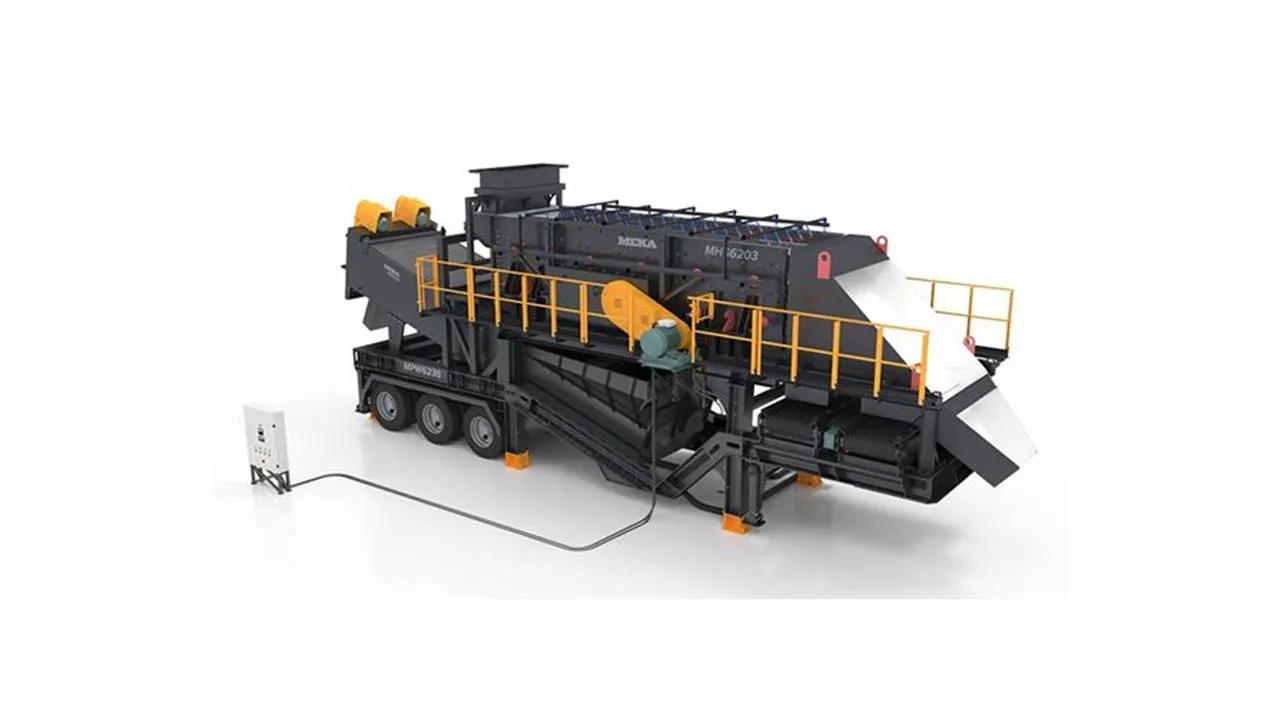
Sand and gravel often carry clay, silt, or contamination that must be removed to meet construction specifications. Portable Wash Plants add washing and classification capability to the mobile circuit, combining a fine material washer or sand classification system with dewatering on a portable chassis.
MEKA's portable wash plants integrate with the rest of the portable range, allowing wet processing to be added to a mobile crushing train wherever material quality demands it.
Portable Two-Stage Plants
The Portable Two-Stage Plant compresses a complete primary-plus-secondary crushing circuit, with screening, onto a highly compact configuration. Two crushing stages and a screen are connected as a modular unit that sets up and tears down faster than separate units in a conventional train. This format suits operations that move frequently, need to maximize uptime on arrival, and process medium volumes.
Applications
Quarry and Aggregate Production
Hard-rock quarries with shorter reserve lives or satellite deposits away from a main stationary plant are the core application for portable jaw and cone crusher combinations. A typical two-stage portable train, MPJ primary jaw followed by a portable cone crusher with onboard screen, can deliver three classified aggregate fractions in a closed circuit, ready for direct delivery or stockpiling.
Recycling: Construction and Demolition Waste
Demolition sites generate large volumes of concrete rubble, masonry, and asphalt that can be crushed and recycled into secondary aggregate. A portable primary impact crusher handles the variable-sized, often steel-reinforced feed effectively; the onboard screen classifies the output. The recycled material is used directly on the site, as fill, sub-base, or road base, dramatically reducing haulage and disposal costs.
MEKA's construction and demolition waste recycling technology is specifically designed to integrate with their portable crushing range. See MEKA C&D Recycling Solutions →
Mining
Contract miners and exploration operations that work at multiple sites rely on portable crushing plants for the same reason as road contractors: the equipment must follow the project. Hard-rock applications suit portable jaw plus cone trains; softer ore may use portable impact crushers. Where ore requires controlled sizing for downstream processing, portable cone crushers or portable VSI crushers with fine settings can deliver the required product size.
Road and Infrastructure Projects
Highway construction, runway construction, and major dam or hydropower projects all consume large quantities of aggregate over a defined project duration. Portable plants set up at or near the construction zone, process locally quarried rock or river gravel, and are relocated or redeployed when the project closes.
Recycling with Mobile Plants
Urban construction and infrastructure rehabilitation generate millions of tonnes of concrete, asphalt, and masonry annually. Processing this material on-site with a mobile crusher turns a waste disposal cost into a usable resource.
A portable impact crusher accepts broken concrete slabs and rubble, reducing them to specified sizes. An overbelt magnetic separator removes reinforcing steel. The classified output, clean crushed concrete aggregate, can meet sub-base specifications in many markets when processed and tested according to local standards, and can often be used directly in road construction on the same project.
How to Choose: A Mobile Crusher Selection Guide
Buyers often know they need mobile capability before they know which type. These seven parameters narrow the field:
- Feed material and hardness. For hard, highly abrasive rock (granite, basalt, quartzite): jaw crusher primary, cone crusher secondary/tertiary. For soft to medium-hard rock (limestone, dolomite, recycled concrete): impact crushers are more economical and deliver better reduction ratios. Mixed or unknown feeds: jaw primary is the safe choice.
- Required capacity (tph). Match the primary crusher size to the peak required throughput, including the recirculating load in closed circuit. Under-sizing the primary creates a bottleneck that no downstream machine can compensate for.
- Final product sizes. If one coarse product is sufficient, a single-stage portable with onboard screen may be enough. If multiple fractions or fine aggregate (0–4 mm) are needed, a two-stage or three-stage portable train, or a two-stage plant, is required.
- Site conditions and relocation frequency. For daily or weekly moves within a quarry face, tracked units may have an edge. For weekly-to-monthly moves between sites or projects with a mains power connection available, wheeled portable units deliver lower operating cost and simpler transport logistics.
- Power source. Wheeled portable units connect to grid electricity, cleaner, cheaper per hour, and more consistent than onboard diesel. Where grid connection is impossible or impractical, diesel-powered generator sets can supply the plant.
- Circuit configuration. A portable two-stage plant or a closed-circuit portable impact plant offers the simplest single-unit solution. Multi-stage trains of portable jaw plus portable cone offer the highest throughput and flexibility. Define whether a stand-alone unit or a modular multi-unit train is needed before comparing individual machines.
- Total cost of ownership. Compare not just purchase price but: wear parts cost per tonne (strongly influenced by material hardness and crusher type), energy cost per tonne (electric vs. diesel), maintenance frequency, and residual value at end of project. A portable wheel-mounted plant running on grid electricity typically shows significantly lower operating cost per tonne than an equivalent diesel-powered tracked unit over a multi-year project.
MEKA Portable Solutions
MEKA's complete portable range covers every stage of mobile crushing and screening, all wheel-mounted and built for connection to grid power:
Portable Jaw Crushers (MPJ Series), Primary crushing of hard to soft rock and recycled materials. Features MJ jaw crusher, MGF grizzly feeder, discharge conveyor, and bypass conveyor on a single road-legal trailer.
Explore Portable Jaw Crushers →
Portable Primary Impact Crushers, Versatile primary impact crushing for limestone, low-abrasion rock, and recycling. High reduction ratio and hydraulic opening for ease of maintenance.
Explore Portable Primary Impact Crushers →
Portable Secondary Impact Crushers (MPSI), MSI four-blow-bar secondary impactor for limestone, recycling, and soft aggregate secondary reduction.
Explore Portable Secondary Impact Crushers →
Portable Impact Crushing Plants, Closed-circuit primary impact plant with onboard screen, delivering two or three products from a single trailer.
Explore Portable Impact Crushing Plants →
Portable Cone Crushers, MCH Series cone crusher with 3 or 4-deck MS screen for secondary and tertiary crushing of hard, abrasive material.
Explore Portable Cone Crushers →
Portable VSI Crushers, G Model and L Model VSI crushers for manufactured sand production and product shape improvement.
Explore Portable VSI Crushers →
Portable Screens, Inclined, horizontal, and complete screening plants for classification without crushing.
Explore Portable Screens →
Portable Wash Plants, Sand and aggregate washing on a portable chassis for clay-contaminated feeds.
Explore Portable Wash Plants →
Portable Two-Stage Plants, Compact primary-plus-secondary crushing and screening in a rapid-deploy modular configuration.
Explore Portable Two-Stage Plants →
View All MEKA Mobile Solutions →
Request a Quote for Your Mobile Crushing Project →