MEKA Mobile Plant for Holcim Concrete Recycling in Morocco
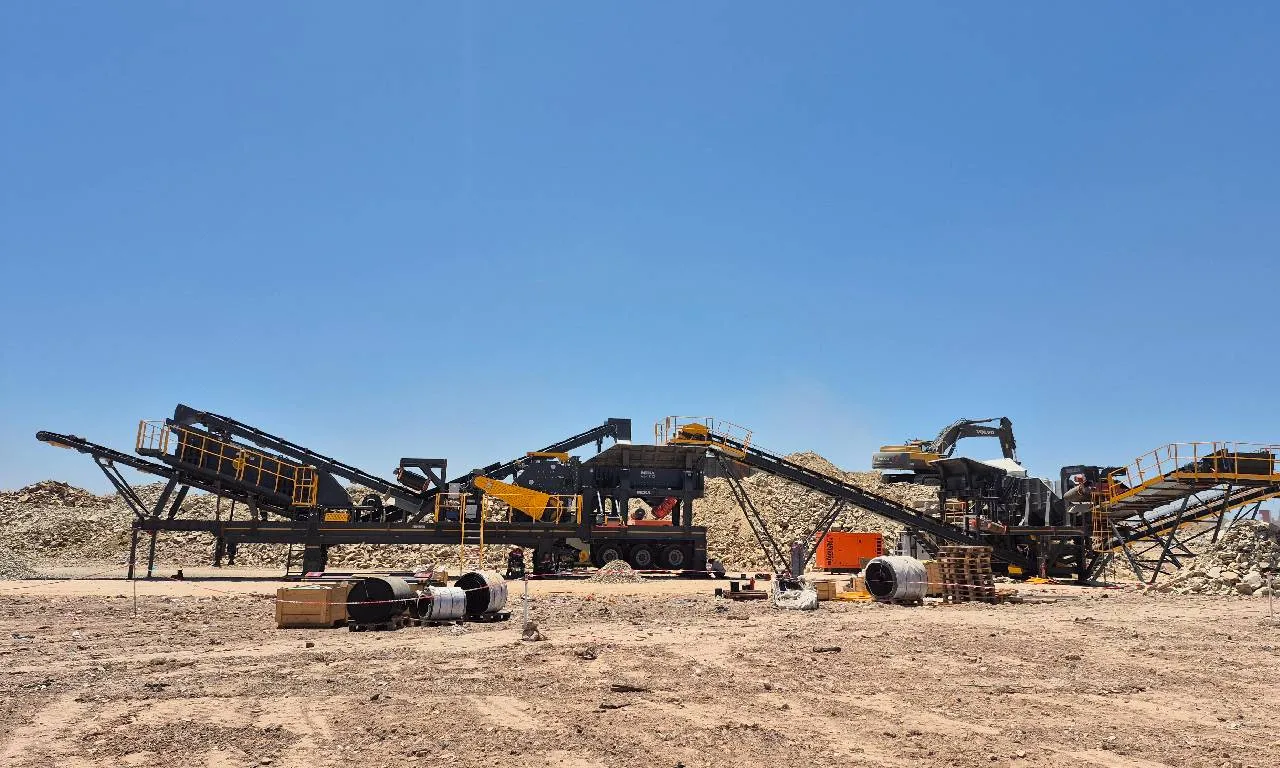
Holcim and the Casablanca Prefecture have commissioned a high-capacity mobile crushing and screening plant under a pilot project designed to return demolition waste from urban regeneration back into the economy. Reusing construction and demolition waste without harming the environment is a central part of sustainable urbanisation, and this pilot targets the recycling of demolition concrete generated by regeneration works across the region. Following the successful completion of the pilot, the partners plan to roll the model out nationwide; once the plants operate at full capacity, the aim is to crush and return more than 1,000,000 tonnes of recycled concrete material to production each year across different regions.
A Dual Mobile Unit Concept Rated at 150 t/h
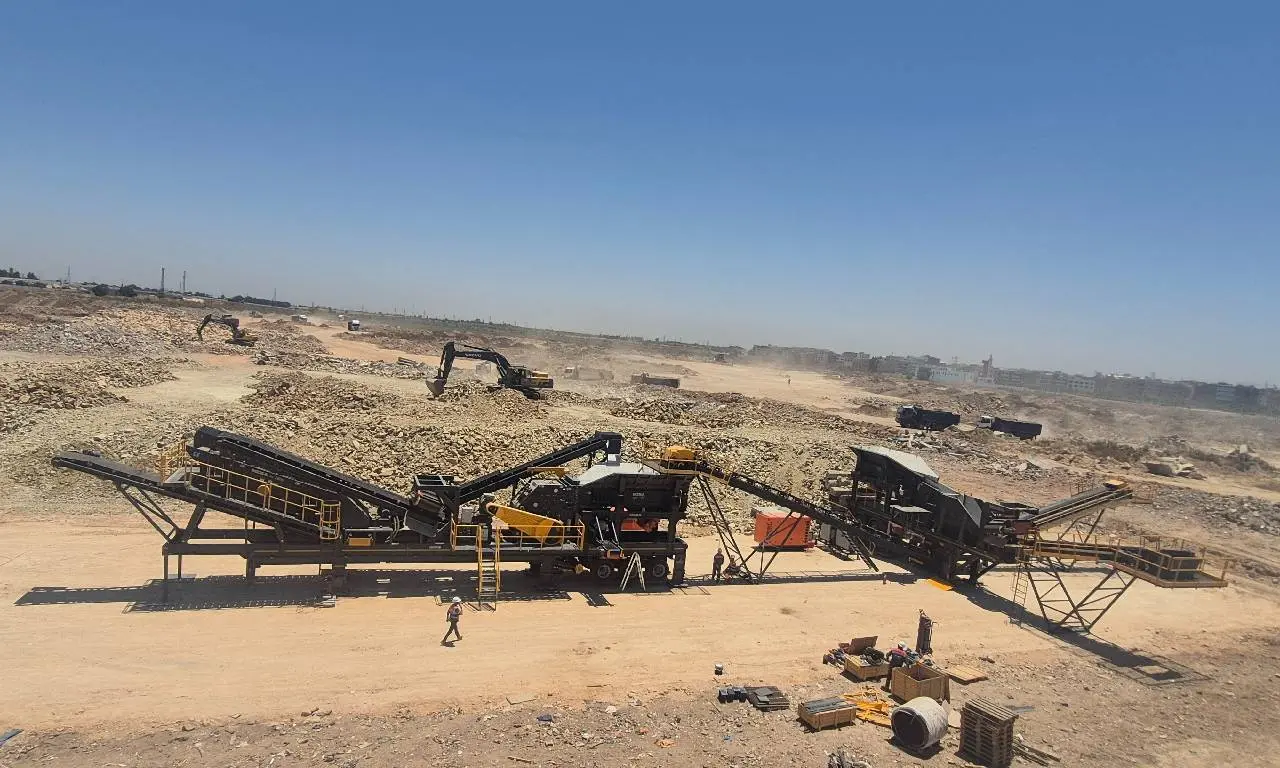
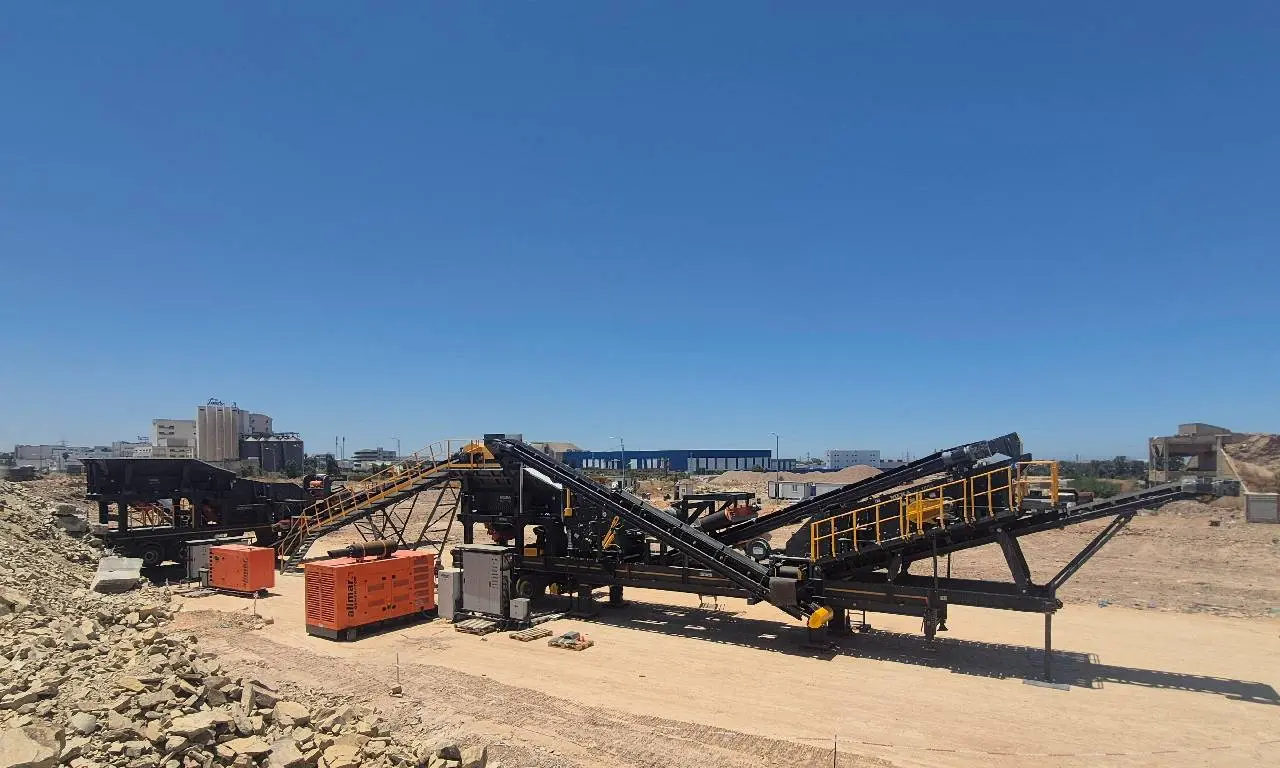
The system built for the project consists of two main mobile units, configured for logistical flexibility and high mobility. With a nominal processing capacity of 150 tonnes per hour, the plant carries out primary feeding, screening and crushing as an integrated line. To improve the quality and purity of the aggregate produced during recycling, two separation technologies are used. Overband magnetic separators recover reinforcing steel and metal fragments from the concrete using a 13.5 kW electromagnetic system, while a wind shifter air separator removes plastic, wood and other light contaminants from the material stream with an air current driven by an 11 kW motor.
Technical Configuration and Equipment
The plant is built with components rated for demanding construction-waste and concrete-crushing conditions and compliant with European standards. High-quality switchgear from Schneider, Siemens, ABB or Eaton is used throughout the system.
Unit 1: MP 1176 Mobile Primary Unit (on ST 2 trailer)
- Heavy-duty feeder (MPF 1146 Pan Feeder): a 7 m³ bunker measuring 1,100 mm wide and 4,600 mm long. The body is made of 16 mm steel plate and the material-contact surfaces of 15 mm wear liner. Maximum feed size is 800 mm.
- Pre-screening unit (MSS 1230 Scalper Screen): a 2-deck stepped screen structure measuring 1,200 x 3,000 mm.
- Belt conveyor (MC 1400X1100P): 1,400 x 11,000 mm, with impact bars and a 13 mm thick, 5-ply EP 800 belt.
- Magnetic separator (EMBS-C-1400H): a 950 mm wide, 13.5 kW electromagnetic protection system.
- Power group: 100 kVA power supply for primary unit operations.
Unit 2: MP 1114-S1 Mobile Secondary Unit (on ST 3 heavy-duty trailer)
- Grizzly feeder (MGF 1152): 1,100 mm wide, 5,200 mm long, with a 7 m³ bunker lined with AR400 wear plate.
- Primary impact crusher (MPI 1114): 200 kW motor power and a Ø 1,100 x 1,400 mm rotor. It has four reversible blow bars in 16-18% manganese alloy, a hydraulically assisted mechanical adjustment mechanism and a hydraulically opening body for easy maintenance. Maximum feed size is 600 mm.
- Inclined screen (MS 1650X2): 1,600 x 5,000 mm, 2-deck, with a screening system on SKF/FAG bearings specified for vibrating machines (15 kW).
- Integrated stockpile and return conveyors: MC 1200x15500, MC 650x13000, MC 650x2500 and MC 500x4000 conveyor lines designed to move products of different sizes, fitted with emergency pull-cords and vulcanised rubber drums.
- Power group and dimensions: 710 kVA generator for the secondary unit. Transport-mode length is 23.5 m and working-mode length is 25.6 m.
Circular Economy and Environmental Benefit
This mobile plant, a joint investment by Holcim and the Casablanca Prefecture, reduces the environmental impact of urban regeneration projects while helping to conserve natural resources. Crushing concrete waste on site and reusing it as quality aggregate lowers logistics costs and demonstrates the viability of the circular economy model in the construction sector.
MEKA GLOBAL