Belt Conveyor Occupational Health and Safety
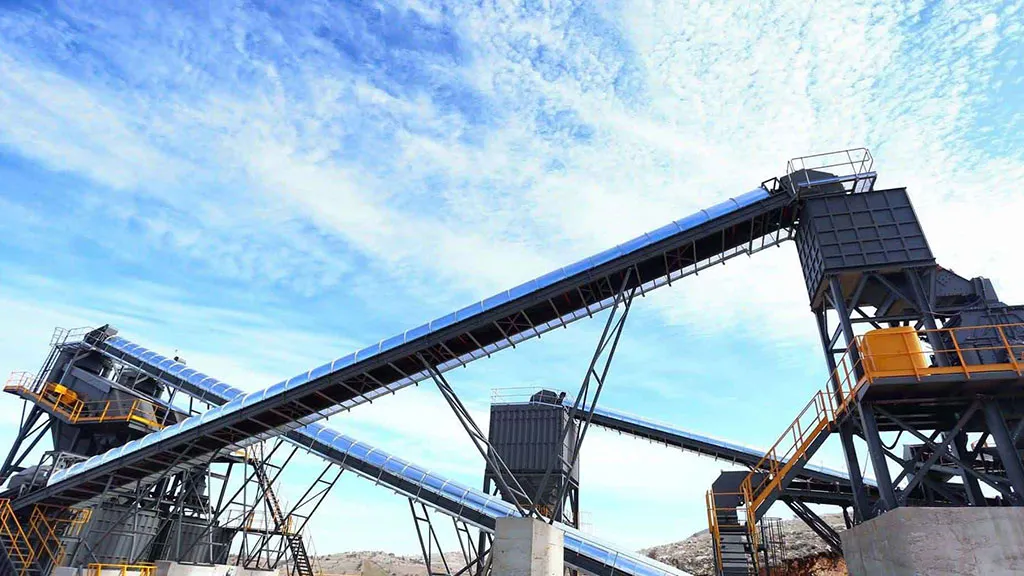
The hazard potential of belt conveyors and statistical data on general accidents.
Analysis of Conveyor Accidents
Serious and fatal mechanical accidents that occurred in mining operations in the USA between 2000 and 2007 were examined, and it was found that the majority of these accidents occurred at belt conveyors and the second-largest group in the crusher and mill sections. In this study, risks that can result in death — such as belt fires and falls from height during belt maintenance and repair work — were identified at belt conveyors. In addition, accidents that can result in very serious injuries — such as becoming caught or entangled in the belts due to causes such as workers' carelessness and inadequate equipment during belt operation and during the cleaning and maintenance of belt idlers and pulleys — were identified.
Causes of common accidents: hazards around the drive pulley and tail pulleys.
Prevention and Protection Methods
The belt itself on the conveyor and the drive, tail, tracking and take-up pulleys and idlers are in motion. In most plants, the moving pulleys are not even enclosed against work accidents. For this reason, the entire belt is a potential source of danger. Especially in the winter months and when moist material is conveyed on the belt, ore wraps around the pulleys, and this causes the belt to drift to the right and left. Belt scrapers not working properly, and the material being cold, muddy, moist and clayey, are the reasons for mud wrapping around the pulleys. To prevent this drift, the mud wrapping around the belt pulley must be cleaned. If this is not done according to the rules, the work to be carried out is a significant source of danger.When the ore sticks to the belt pulley, the belt must be stopped and this mud cleaned off. Often, without thinking about what might happen, workers carry out the pulley-cleaning task with a shovel while the belt is running. When the shovel goes between the belt and the pulley, it is as if a hidden hand pulls in the shovel and the hand holding it. As a result, in a very short time — a tenth of a second — the worker is pulled between the running belt and the pulley and crushed flat.

These accidents have occurred frequently around the world, and they will continue to occur as long as no precautions are taken and workers are not trained. The first condition for preventing accidents on belts is training, and enclosing the places that pose a danger so that workers cannot reach them.
Basic Safety Rules:
"If It Is Moving, It Is Dangerous — Do Not Touch" and "If It Is Moving, Enclose It With a Suitable Guard"
- The starting and checking of conveyors must be done by establishing contact with the operator.
- Most accidents occur around the drive pulley, the tail pulleys and the drive systems.
- Most accidents occur during cleaning or other maintenance activities.
- In particular, high-speed rotational movement is a source of entanglement or crushing risks. On a conveyor there are many such risk points. When a worker's hand, foot or a part of their clothing gets caught in the conveyor belt and starts to move with the belt, an accident becomes inevitable.
- The most important precaution to be taken is that "all moving machine parts should be ENCLOSED WITH A SUITABLY DESIGNED GUARD."
- While the belt conveyor is running, its moving parts must not be interfered with by hand or with any tool. Even small belts are not as harmless as they appear.
- While in motion, the belt's pulleys and belts must be inspected visually. Missing, torn or worn parts must be reported to the shift technicians or unit supervisors.
- When inspecting the pulleys and belts of a stopped belt, against a possible danger the power must be cut off and a WARNING SIGN must be hung on its switch.
- All carrying and return idlers must be inspected visually every day while the belt is in motion, and those that are missing and those that do not turn must be identified.
- The belt's alarms and sirens, and whether the emergency-stop pull cord is in working condition, must be checked regularly at certain intervals.
- The conveyors' guards and scrapers must be fitted and in working order.
- The gaps between the idlers must never be cleaned by hand.
- Jammed idlers that do not turn must not be turned by hand.
- The emergency-stop pull cord of the conveyors must be checked at appropriate times without interrupting the work.
- While the belt is running, the mud wrapping around the pulley must NEVER be cleaned.

- The underside of moving conveyor belts must never be cleaned without appropriate tools.
- One must never try to reach under running conveyor belts by hand.
- Under no circumstances must one pass under or over moving belt conveyors.
- If it is necessary to get to the other side of a moving belt, one must go around the belt.
- For crossing to the other side on long belts, special crossing bridges with stairs and railings must be built.
- One must not work with a shovel near a moving pulley or conveyor.
- Care must be taken with materials that may splash off or fall from the belt.
- One must not walk along the conveyor belt unless necessary. When necessary, while walking along the conveyor belt, one must not get too close to the conveyor.
- Care must be taken not to touch the emergency-stop pull cord. If the belt is stopped by accidentally catching the cord, the operator must be informed immediately about what happened.
- Special care must be taken that material which must be carried in the arms or on the back along the conveyor belt — especially the part that remains on the back — does not get caught in the belt.
- The walkways along the belt edge must be kept clean. No material or tools must be left on these walkways.
- Warning signs must be hung especially at the head and tail ends of the belt and on the walkways.

- In emergencies, the belt must be stopped with the pull cord and the operator informed.
- One must not ride on conveyors, nor carry picks, shovels, belt-splicing equipment, etc. on the conveyors.
- One must not walk around the belt with clothing that could catch in it, such as a long apron or a neck scarf. Those responsible for the belts must wear suitable overalls.
- When any material needs to be carried on the belt, the carrying operation must only be done in accordance with the decision of the responsible engineer and the precautions they take.
- Belt conveyors must be started and stopped only by authorized personnel.
- While the belt is running, a shovel must never be used for any work around the moving belt and pulley.
- While the belt is running, idlers that do not turn must not be turned by hand.
- When conveyors are stopped for maintenance or a fault, to prevent them from being started by accident, warning signs such as "CAUTION! OUT OF ORDER" or "CAUTION! MAINTENANCE IN PROGRESS" must be hung on the start buttons. Moreover, if possible, they must be locked with a padlock.

Operational Safety Measures
Operating and checking conveyors safely.
Safety precautions to be taken during maintenance and repair.
Emergency Management
Emergency-stop procedures and regular checking of the pull cords.
The importance of warning signs and safety equipment.
Training and Awareness
Training workers and raising their awareness of the risks associated with belt conveyors.
The role of safety training in preventing work accidents.
Conclusion and Recommendations
Recommended strategies for preventing accidents and advice for operation managers.
Steps to be followed for continuous improvement.
Short description
"What If It Happens" Test

MEKA GLOBAL