How Is Concrete Made? Step-by-Step Concrete Production Process
Take a look around you. The buildings you see, the bridges, the house you live in, the road you walk on... most of them are standing thanks to concrete. Concrete is almost everywhere. So how does this material end up being so strong? It isn't just a matter of mixing cement, sand and water — there's a bit more to it. Come on, let's step into the kitchen of this process and see exactly how it's done.
What Is Concrete and Where Is It Used?
What we call concrete is basically made up of three things: cement, water and aggregate (that is, sand and gravel). Sometimes, to take things a step further, certain chemical or mineral additives are also added to this basic recipe.
When these materials come together, a chemical process called "hydration" begins. Thanks to this reaction, that mud-like mixture hardens over time, becomes as solid as rock, and reaches that tremendous strength.
There is almost no limit to where concrete is used. It is used in the foundations and columns of housing, in roads, airport runways, bridge piers, dam bodies and even in artistic sculptures. Engineers and architects love concrete because they can give it any shape they want and because it is very strong.
What Materials Are Used in Making Concrete?
Good concrete starts with good materials. Each one has its own job:
Cement:It is the "glue" of the mixture. The moment it meets water the reaction begins, and it becomes the main binder that sticks all the materials together and hardens. Portland cement is generally used.
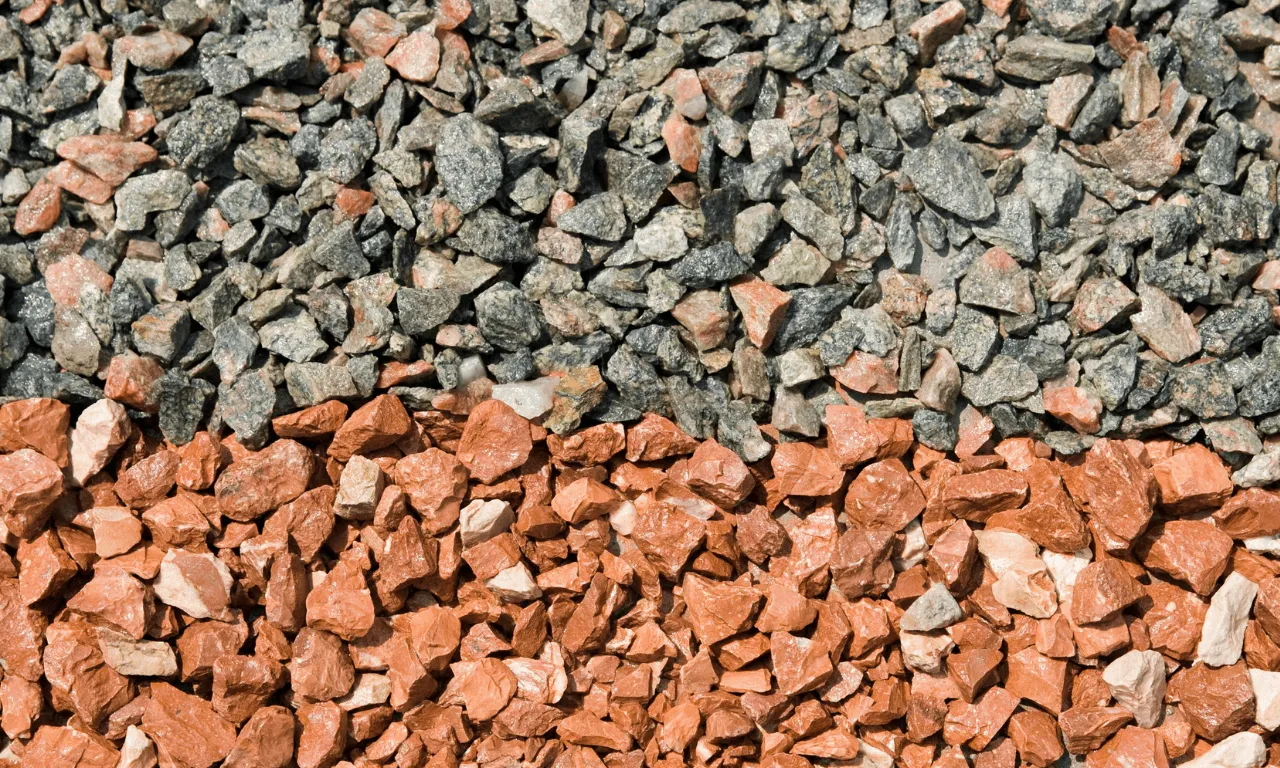
Aggregates:They are the skeleton of concrete. Think of them as sand (fine aggregate) and gravel or crushed stone (coarse aggregate). They make up most of the volume of concrete and provide its durability. For a strong, void-free structure, the aggregate must be clean, sound and of different sizes (grading).
Water:It is the "igniter" of the reaction. By reacting with the cement, it starts the hardening process (hydration). It is very important that the water used is clean; salty, acidic or oily water can ruin the strength of the concrete.
Admixtures:These are the "vitamins" of concrete. Added in very small amounts, they can completely change its properties. For example, there are admixtures that make the concrete more fluid (plasticizers and superplasticizers), that keep it from freezing in very cold weather, or that slow down rapid drying in very hot weather (set retarders).
The Step-by-Step Concrete Production Process
Concrete production consists of a series of steps, each of which must be carefully controlled.
1. Preparing the Recipe (Design Stage)
Concrete production actually begins before the mixer. The first step is to create the "recipe." Engineers design a mix by looking at where the concrete will be used (is it a foundation or a column?), how strong it needs to be, and how fluid it needs to be (so it settles into the formwork easily).
The most critical rule here is the water/cement ratio. The less water you use (as long as it is enough to complete the reaction), the denser and stronger the concrete becomes. Too much water weakens the mixture. This design must comply with all the technical specifications of the project.
2. Precise Weighing (Batching) and Dry Mixing
Once the recipe is ready, cement from the huge silos and aggregates from the bins (compartments) are weighed on precise scales. Here everything is measured by weight — nothing is done by eye.
One of the most important quality-control steps also comes into play here: the moisture of the aggregate is measured. If the sand is wet because of rain, this "extra" water is subtracted from the total water in the recipe. That way the water/cement ratio never drifts. All the weighed dry materials (aggregate and cement) are transferred to the mixer to be combined.
3. The "Magic" Touch: Water and Admixtures
While the dry mix is in the mixer, exactly the calculated amount of water and those chemical admixtures we call "vitamins" come into play. The dosing of these admixtures is so precise that their measurements are made in millilitres.
4. Thorough Mixing and the Consistency Test
Once all the materials are in the mixer, the mixer starts running. How long it turns depends on the type of mixer. What matters is that every grain of sand and gravel is thoroughly coated with the cementitious water (cement paste). In other words, every point of the mixture must be identical, achieving complete uniformity.
Once the concrete is ready, a "slump test" is carried out to check its consistency. This is a quick field test that lets us understand how fluid (or stiff) the concrete is.
5. The Journey to the Site and Placement
The homogeneous concrete is loaded onto those famous truck mixers (transit mixers) that are constantly turning on the roads, and it sets off for the site right away. It is a race, because the concrete begins to set (harden) while it is still on the road.
The concrete's job isn't over once it's poured into the formwork at the site. It is vibrated with tools called "vibrators." This process expels the trapped air bubbles inside the mixture and ensures the concrete settles into every corner of the formwork. An air bubble means weakness.
After placement, "curing" begins. This is the process of keeping the concrete moist (watering it or covering it). This "care" process is vital for the concrete to reach its design strength.
Factors Affecting Concrete Quality
Water/Cement Ratio:This is the most fundamental rule of concrete. As water increases, the concrete weakens and becomes more prone to letting water through. In short, too much water ruins concrete.
Mixing Time:This too is a balancing act. If you don't mix enough, the material won't fully come together and some parts of the concrete will stay weak. But if you run the mixer longer than necessary, the material starts to segregate (the gravel sinks to the bottom) or the chemicals you added lose their effect.
Material Quality:No matter how well you mix, if the material is bad the result will be bad too. You can't expect a solid structure from sand with mud in it or from stale cement.
Weather Conditions:The weather is very important while concrete is being poured. Scorching heat "steals" the water from the concrete instantly, which is an open invitation to cracks. Conversely, freezing cold slows down that chemical reaction (hydration), even bringing it to a standstill.
The Modern Method: Production at a Concrete Batching Plant
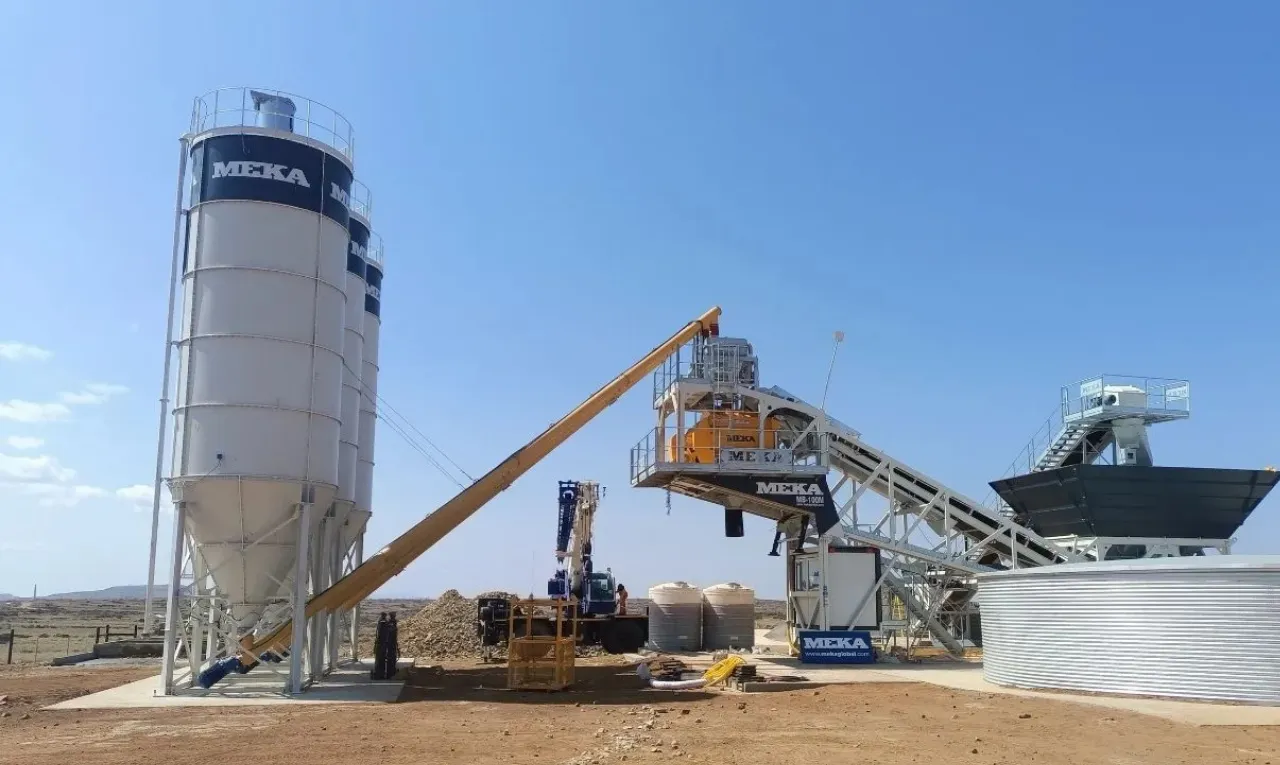
No one mixes concrete with a shovel on the site anymore. For this job there are giant facilities called "concrete batching plants" that manage everything by computer. Modern systems such as MEKA's plants handle this entire process flawlessly and automatically.
In these facilities, aggregates and cement are kept ready for use in giant silos and stockpile areas.
The operator simply selects the desired concrete recipe from the computer screen.
The system weighs each material to the exact gram and automatically transfers it to a huge central mixer.
Water and chemical admixtures are added to the mixture at exactly the right moment, again with precise measuring (dosing) systems.
The high-capacity mixer rapidly makes all the materials homogeneous.
The finished concrete is loaded into the truck mixer and sent to the site.
Thanks to this automation, it becomes possible to produce concrete of the same quality every time and in every truck, to prevent material waste and to speed up the entire process.
Conclusion
As you can see, making concrete isn't just "mixing" — it's an engineering task in which every step is carefully monitored. Without the right materials, the perfect ratio, ideal mixing and careful placement, it would be impossible to build the solid structures we rely on. And modern concrete batching plants, by setting this complex process to a flawless standard, are the very technology that lets us build safe cities.
MEKA GLOBAL