Sand Production: Methods, Washing and Sustainability
What Is Sand Production?
Sand production is the extraction and preparation for use of the sand found in rivers, streams and creek beds and in lakes and seas, in accordance with its intended use. For this, sand is most often produced from the bed where it formed or accumulated using excavating and loading equipment such as excavators, dozers and draglines; it is then transported and cleaned of the unwanted impurities it contains at washing and sizing plants, sized, and sometimes dried before being made available for use.
How Is Sand Produced?
Producing sand is not difficult. In riverbeds, lakes and seas, the sand is heaped up loosely, with the grains separated from one another. Sand found in this way can easily be loaded onto a truck with a loader.
Gold, heavy minerals and sand are produced from placer deposits. Most of the time, placer formations are very far from the places where sand and aggregate are used. If they have to be transported, it entails a significant cost. However, sand is produced from placer deposits that are a reasonable distance from the places of use.
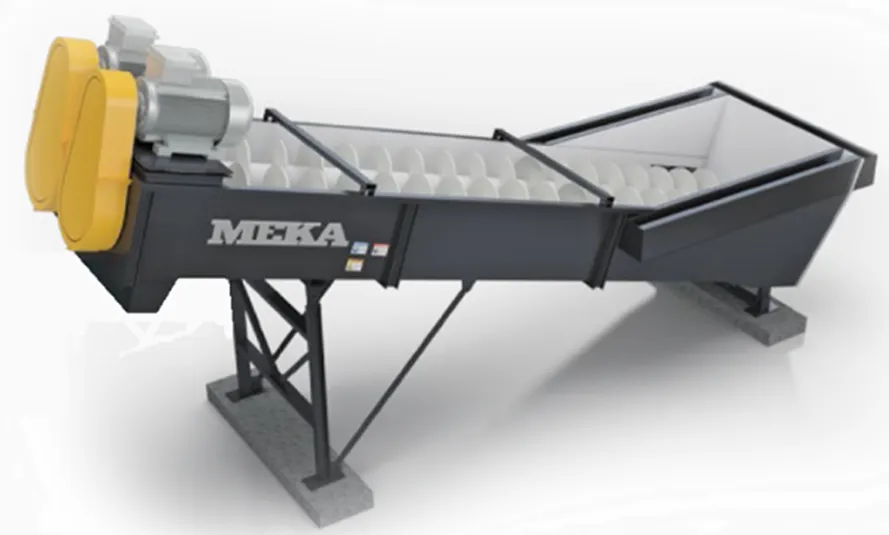
In most placers, the sand and gravel are found cemented together in agglomerate form. Since placers form over time, they also contain organic matter that is undesirable in concrete. For this reason, the hardened sand clumps that have formed need to be broken up and dispersed with a log washer, and then the organic impurities they contain need to be cleaned in spiral (screw) classifiers.
Today, depending on the place of use, aggregate is produced from limestone, dolomite, granite, syenite, diorite, monzonite, andesite, basalt and river gravel. When aggregate is crushed even finer, and even ground, sand is obtained. This sand is called "crushed sand" (manufactured sand). Depending on the properties of the aggregate and sand, the material produced is used in the concrete and construction sector.
Limestone is the rock most used to produce aggregate and sand. Rocks containing at least 90% CaCO3 are called "limestone." Since the amount of CaCO3 in the chemical composition of the rock is more than 90%, it is called limestone. When it contains more than 98.5% CaCO3, the rock falls into the high-purity limestone class.
The Environmental Effects of Sand Production
Desert and sea sands are not suitable for use in the construction sector due to their physical and chemical properties and the environmental and social effects of sand production.
Producing large quantities of sand from placers, streams and river beds and from the surroundings of these areas causes major changes in the topography, ecosystem and biodiversity of the region. The best (worst) example of this can be seen from a comparison of two images taken by NASA around Lake Poyang in the years 1995 and 2013.

Lake Poyang is China's largest freshwater lake. Sand production has seriously altered the structure of the lake, especially the water inflow and outflow.
As sand is taken from the areas of rivers near the seas, the riverbed deepens, and because the water level drops, salt water from the sea moves inland along the riverbed. As a result of sand extraction, the ecological structure of the region is disrupted, and because of the salt water penetrating inland, the use of the land for agriculture becomes impossible. The need for clean, fresh water in the region increases, and land subsidence and floods occur.
The negative consequences of extracting sand, especially from rivers, can be seen in many countries. As a result of sand extraction in the Mekong River, the longest river in Southeast Asia, seawater entered the delta whose level had dropped, and the fertile lands where agriculture had previously been carried out became salinized, so that the land in the region became unfarmable.

In Indonesia, which consists of 17,500 islands — more than 7,000 of them uninhabited — about 24 islands have disappeared through erosion as a result of sand production. Sand production has also negatively affected fishing.
In Africa too, the sands on the coasts have started to be used to build large cities. It is stated that this production could also make the coastlines more vulnerable to the effects of climate change, such as stronger storms.
Irregular, unregulated production from every sand bed has negative effects on the environment. It is recommended that an international standard be established in this direction to regulate sand production worldwide.
The Sand Production Process
The sand production process is managed carefully in order to ensure the sustainable use of natural resources. First, large rock pieces are crushed and passed through screening to be turned into sand grains. Then the sand is washed, classified and sometimes treated with chemical processes to give it the ideal properties for the construction and industrial sectors.
The Formation and Sources of Sand
Over time, rocks turn into sand by being eroded through various physical effects — chiefly wind, changes in air temperature, and the water they contain freezing in the cold and thawing in the heat. The sand that forms is then carried by the wind to deserts on the plains, and by water to the sea and to stream and river beds, where it piles up.
The SiO2 ratio of the sand used in the construction sector is generally between 60% and 75%. Depending on its structure, sand can also contain SiO2 in higher ratios. This sand can be used in other sectors as well as in construction. What matters here is that the surfaces of the sand grains are suitable for bonding in concrete and make it possible.
The origin of sands with a SiO2 ratio of 90% and above is mostly granite, syenite, granodiorite, diorite, monzonite and quartz veins. As a result of these rocks crumbling due to natural conditions and accumulating in one place because of their density, the SiO2 ratio in old sediments can rise to 90% and above.
Can Sand Be Produced from Rocks?
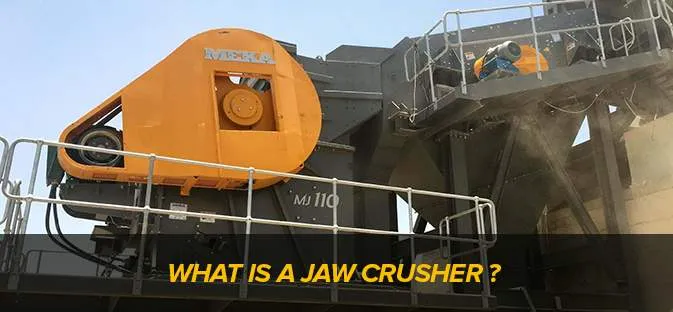
Sand formed over a long process as a result of rocks crumbling through the physical events they undergo in nature. Today, using equipment in line with sand formation, sand — indeed higher-quality sand — can be produced with physical forces applied to rocks. For this, crushers and mills are used, and through the crushing and grinding of rocks, sand can be produced in a very short time. When limestone, dolomite, granite, syenite, diorite, monzonite, andesite, basalt and river gravel are crushed and even ground, sand is obtained. This sand is called "crushed sand." Depending on the properties of the aggregate and sand, the material produced is used in the concrete and construction sector.
The Stages of the Sand Production Process
Sand production varies according to the formation of the sand, its location and its intended use. If the sand, after forming, is in a hardened state due to the effect of compaction, it is loosened with a dozer. Most of the time, it can be produced by being excavated with an excavator or loader without any need for loosening.
For sand production in sea beds or lakes, cable-operated buckets called draglines are used. If the sand is not to be taken from deep down, sand and water are sucked from the bottom with large pumps produced for special purposes and mounted on a pontoon or floating platform, and the water and sand are separated from each other in a suitable environment.
In another method, sand is transported from where it is located to the ship or platform above the water by means of a cutter fitted with a paddle conveyor or wheels lowered to the sea bottom.
If the sand is taken from the sea or lake in an area far from the shore, a pipeline is laid to the land when necessary. Alternatively, the sand taken from the bottom is stockpiled on a floating platform and transported to land at certain intervals.
The Extraction and Processing of Sand
After the sand is produced from where it forms, it needs to be cleaned by washing out the possible impurities in it. For this purpose, a log washer is used when necessary to separate sand grains that have stuck together, and, using washing drums, washing screens, spirals or a cyclone, the sand is cleaned of the physical and chemical impurities it contains that are unsuitable for its use. The cleaned sand is then classified by size on screens in accordance with its intended use.
Sand Production Technologies
Sand production technologies aim to minimize environmental effects and increase efficiency. Advanced crushers and specially designed screening machines bring the sand grains to the desired sizes while lowering energy consumption. In addition, water recycling systems reduce water use and ease the burden on the environment. State-of-the-art sensors and automation systems optimize the whole process, increasing production speed and quality and thereby offering modern solutions for sustainable sand production.
The Contribution of Modern Technologies to Sand Production
There is no special technology dedicated to sand production. The capacity, functionality and effectiveness of the equipment currently in use are increased with new applications. When necessary, this equipment can also be fitted with suitable electronic control devices.
Sand Screening and Washing Operations
In nature, the sand, gravel and other materials used in construction and concrete making contain, even if in small amounts, parts such as salt, clay, schist, slime (fines), tree leaves and branches that cause problems in the plaster and concrete made afterwards and reduce their strength. In such a case, the materials to be used and the unwanted parts they contain must first be freed from one another, and then the sand must be cleaned by being washed and removed from the environment.
In placer deposits, in order to recover — without grinding — the valuable minerals contained in the clumps that are partly found together or in agglomerate form, especially those bound by clay, schist or lime, these clumps are first broken up with a physical force and then washed.
When the clumps are not strongly bound together, there is the possibility of dispersing them with water through a simple washing operation and separating them from one another. However, if they have come together with very strong binders, separating them is somewhat difficult. Depending on their size, they must first be separated from one another using clay-releasing tanks (blade mills) or a log washer, and then cleaned by washing.
Washers are equipment in which, using water, the unwanted parts are removed from the environment in order to make the rocks usable in accordance with their condition, size and intended use. Most of the time, the material needs to be dewatered after the washer. For this, the equipment used as a washer carries out the washing and dewatering operations together.
The log washer is a kind of washing trough that physically resembles spirals and is used before screening or dewatering. Blades of various shapes are placed on a shaft rotating inside a narrow trough — on a single shaft, or usually on two shafts rotating in opposite directions to each other. In the fed material, the solids-to-liquid ratio is kept as high as possible. In the trough, the clay, sand, schist and mud that have stuck are separated from one another by the material rubbing against itself, against the blades, or between the blades and the trough.

Clay-releasing tanks are also widely used to break up agglomerated material and free the clay.
In clay-releasing tanks, various numbers of mixing blades are placed on the shaft at the centre of the tank so that the material mixes and rubs against itself. Although the blades rotate in the same direction, since the blade angles are opposite, the material is moved toward one another between the blades, causing the grains to collide with each other. Through these movements, the clay is separated from the material it has stuck to. The size of the material to be cleaned in the tanks is important. The material must not be of a size that could settle in the tank.
In washing-dewatering drums, unwanted parts contained in the sand, such as clay and mud, are cleaned off by washing.

Bucket washers and dewaterers are produced for the purpose of washing the material and separating the solids, by washing, from the resulting solid–dirty water mixture.
Usually, the sized material coming from wet screening is fed into the dewaterer tank. Along the tank, the fed material is washed on one side by being stirred with a spiral, and on the other side is displaced by the spirals toward the rotating bucket wheel. In this process, the clay, schist and mud separate from the sand and float, while the coarse-sized sand sinks. The sinking sand is pushed by the spirals toward the rotating bucket wheel; the buckets take the sand from the bottom of the tank and bring it up to the water surface, where the water drains off, and it is then removed for use.
The Sand Washing and Dewatering Unit consists of one or several rotating bucket wheels, a slurry pump, a hydrocyclone, a tank, a silo, a dewatering screen and belts. Depending on the size of the cyclone, separation down to 75 μ can be achieved.

The washing drum consists of a rotating cylindrical body with blades placed inside it that lift and drop the material in order to stir and wash it. Most of the time, a screen is placed at the outlet to clean the material washed in the drum.
Washing spirals: in addition to cyclones, spiral and rake mechanical classifiers have found wide application in sand washing plants. Washing spirals consist of a tank in which the coarse grains settle and a mechanical system that drags and carries the settled material out. The small, fine grains are removed by overflowing from the tank. The density and shape of the material and the pulp density are variables that affect settling.
Natural sand and gravel quarries, by virtue of their formation and location, contain foreign matter such as inorganic components — clay, silt and mud — and sometimes organic matter such as wood, tree roots and leaves. These substances are undesirable in the sand for its place of use.

Automation Systems That Increase Efficiency in Sand Washing
Undoubtedly, every piece of equipment used in sand washing plants has an operating condition in which it is most effective. Operating variables such as water flow rate, water pressure, speed, the density of the medium, capacity and energy consumption determine the effectiveness of the plant and the equipment used and, ultimately, the production cost. These variables can be adjusted by the operators, and can also be adjusted with electronic devices installed in the system and with process-control equipment. Sand washing plants are most often managed from a single control centre, from which the process data can also be changed.Sustainable Sand Production
Sustainable Mining Practices
Sand is the second most used resource by people in the world, after water. In its 2022 report titled "Sand and Sustainability: 10 Strategic Recommendations to Avert a Crisis," published by the UN Environment Programme, it was pointed out that sand production is unsustainable, that this production grows by 6% each year, and a call was made for it to be "defined as a strategic resource" and for its "extraction and use to be reconsidered." Some countries that take the issue seriously have, as a precaution, begun to use renewable and recycled materials in construction. However, this recommendation has not received the response it was expected and needed to receive from most countries.
To speak of sustainability in sand production, first of all it must be used correctly, recycled sand products must absolutely be brought into the usage cycle, and, on the other hand, certain rules must be introduced for sand production.
The Importance of Recycled Sand
The supply of sand is not infinite. When sand is mentioned, to some people the world's sand resources — chiefly in placer deposits, deserts, sea coasts and lake beds — seem limitless. However, most of these sands are not suitable for use, especially in the construction sector. For this reason, the existing sand resources must be used in a planned manner. On the other hand, using recycled sand as well will prevent the unnecessary use of these existing resources.
When well selected, recycled construction waste can be reused as fill material, fill concrete, plaster and screed. This waste can also be used as structural concrete in low-rise buildings.
For construction waste to be recyclable, it must absolutely be crushed, sized and washed well.
Types of Sand Used in the Construction Sector
Sand Types Commonly Used in Construction Projects
The sand used in the construction sector is a loose-textured sediment material sized between -2 mm and +63 µ. The term "fine sand" is used for the size between -250 µ and +63 µ, "medium sand" between -1 mm and +250 µ, and "sand" between -2 mm and +1 mm. Sand contains minerals such as quartz, feldspar, mica and glauconite. The surface properties of the grains, their hardness, and their clay and other contents determine the properties of the sands.
According to its intended use: sand of size < 0.25 mm is called silt sand or filler sand and is used as fill material. Sand of 0.25–1 mm is known as finishing or fine sand used for fine plaster; sand of 0.25–4 mm is the medium-sized sand used for normal and coarse plaster; and sand of 0.25–8 mm is known as the coarse sand used in concrete.
The Role of Sand in Construction Materials
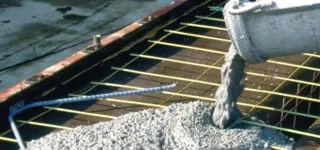
Concrete is the indispensable main component of construction and is formed by the homogeneous mixing, in certain proportions, of cement, water, aggregate, sand and some admixtures. Then, according to its design, this mixture is most often poured — together with reinforcing steel — into a certain formwork and left to set so that it becomes resistant to pressure.
For the compressive strength or load-bearing property of concrete to be high when it sets, it must be mixed correctly, be homogeneous, contain no voids, and be watered appropriately while setting. The most important property of sand is that, coated with cement, it fills the gaps between the larger-sized aggregates and, through its binding property with cement, increases the strength of the concrete.
The Importance of Quality Sand
It is desirable for the compressive strength of concrete to be high. To obtain concrete with high compressive strength, quality sand must also be used.
Rocks with a quartz composition are known as quality aggregate used for concrete and mortar. Concrete contains 75–85% aggregate by weight. This aggregate can be natural gravel with a silica composition, or material obtained by passing blocks and rocks of a similar chemical structure through a crusher.
The stability and density of sand depend largely on the shape of the sand grains and on the grains' ability to hold onto one another. Before using sand in concrete, the physical shape of its grains should be checked. Concrete made with sand consisting of rounded grains has low compressive strength. Elongated or angular sand particles with rough surfaces provide higher strength to the concrete.
The grains of sand to be used in the construction sector must interlock so as to leave no gaps between them, and the sand grains must be angular so that they can come together densely. Most desert and sea sand grains are round in shape, and when they come together, gaps form between them. This reduces the bonding property of the sand and aggregate within the concrete.

For the sand and aggregate to be used in the construction sector to form a good bond when bound with cement, their outer surfaces must be rough.
One of the most important properties of the sand to be used in concrete is its size distribution. For a good bond to form between the aggregate and sand within the concrete, the sand must have a certain size distribution. Fine sands do not remain stable within the concrete; the small grains cause the concrete to slip, and as a result the formation of the chemical bonds needed while the concrete hardens becomes more difficult.
Alkali is a highly undesirable compound in sand. Alkali-containing sand reduces concrete strength. In desert sands, because of the heat, the water in the environment evaporates and salt and alkalis remain in the sand. Sea water is already salty. Even if it is well washed, the small amount of salt remaining in the sand takes up moisture from the atmosphere and, by rusting the reinforcement inside the concrete over time, weakens the concrete.
Even if the shells are broken up, they are flat and their surfaces are shiny, and cement will not stick to shiny surfaces. Cleaning the shells from the sand is also difficult. As long as the shells in sea sand — especially mussel shells — are not cleaned from the sand, the shells will not integrate with the concrete, a void will form within the concrete, and the concrete strength will naturally drop.
The Sand Market and Its Future
Global Sand Demand and Supply
Around 4 billion tonnes of cement are consumed per year in the world. The amount of sand used is about 10 times the cement consumption, so, as a good approximation, more than 40–50 billion tonnes of sand are used in the world each year. On the other hand, nature also continuously produces sand by eroding and breaking down rocks. However, in the last century the amount of sand consumed in the world has remained far above what nature produces.
Trends in the Sand Market
Countries obtain the sand needed for their construction sectors from the sea and from river and stream beds. However, there are issues with the usability, in terms of quality, of the sand produced, and environmental problems occur in the areas where the sand is extracted.
Most countries have their own specific legal rules for extracting sand within their own territory. In these countries, the quality of the sand that can be used in the construction sector has also been determined. In underdeveloped and developing countries that do not have legal rules, sand extraction is carried out in a disorderly way, and this work is even organized by illegal organizations.
One of the important problems related to sand is the cost that must be met to transport the sand from where it is produced to the place of use. Since transport costs make up 70% of total costs in international sand trade, sand is primarily obtained from local sources. Generally, when the transport distance of sand and aggregate exceeds 50 km, the proportion of the transport cost within the sale price of the sand and aggregate increases significantly. Naturally, an increase in distance is directly proportional to an increase in cost. On the other hand, some wealthy countries can meet the cost not only of a 50 km distance but also of transporting sand by sea for kilometres.
According to OEC data, Australia is the world's second-largest sand exporter after the USA. The size of the construction sector is directly proportional to population. China, while consuming around 20 billion tonnes of sand annually, is the world's largest cement producer.
According to a Dutch research group, since 1985 artificial areas 13,500 m² in size have been created by human hand with sand on the world's sea coasts. Over the last 20 years, Singapore has imported about 550 million tonnes of sand from Southeast Asian countries and made an area of 130 million km² usable. The United Arab Emirates also pays Australia 6 billion dollars each year for sand imports.
Sand Production and Use in the Future
When it comes to shelter, the first things that come to mind are an enclosed space such as a building and the sand, gravel and cement used in constructing this space. It is stated that within the next 10 years the world's sand requirement will exceed 50 billion tonnes, that this requirement will be difficult to meet, and that a serious sand shortage will be experienced. For this reason, it is thought that the necessary sand demand will be met primarily by producing sand from aggregate.
MEKA GLOBAL