What Is Limestone? Its Properties and Areas of Use
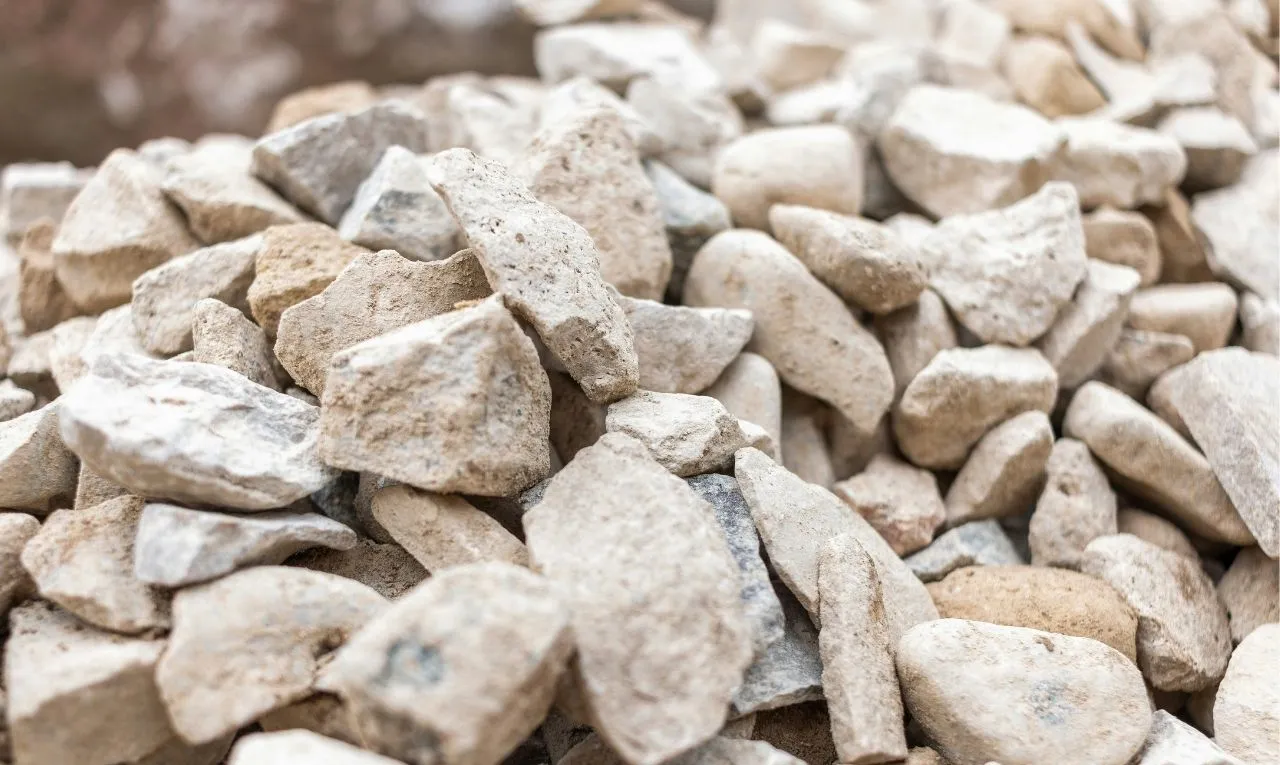
Limestone is a common sedimentary rock consisting largely of calcium carbonate (CaCO3), mostly formed by deposition in marine environments. In construction it is used as an aggregate and as a raw material for cement; in industry it is a critical input in lime, glass and iron-and-steel processes.
On site, this topic usually begins with the question: "Which product can I turn the material coming out of the quarry into, and how should I set up the crushing-and-screening line?" This is because the purity, moisture and grain structure of the limestone affect many parameters — from dust generation to capacity, and from the quality of the final fraction to screening efficiency.
What Is Limestone and How Is It Formed?
Limestone is mostly formed by the compaction and lithification over time of the shells of marine organisms, corals and calcite deposits. For this reason, it is possible to come across fossil traces in limestone quarries; a layered structure is also a frequently seen feature.
Limestone types cover not only different quarries but also textural and chemical differences. While some limestones contain fairly "pure" calcite, others may contain impurities such as dolomite, silica or clay. These impurities directly affect grinding behaviour, washability and suitability for the target sector.
In nature, one can find soft and porous limestones such as chalk, carbonate derivatives such as travertine, or dolomitic limestone types with a higher magnesium content. For this reason, instead of expecting a single, uniform "limestone behaviour," it is a sounder approach to validate the process design with samples and field data.
Properties of Limestone
Limestone properties are shaped by parameters such as mineral composition, grain size, porosity and breakage character. In terms of product quality and equipment selection, the topics most closely tracked on site are:
• Physical durability: Limestone may not be as hard as granite, but it provides sufficient performance for many concrete and infrastructure applications.
• Colour, density and abrasion resistance: Colours ranging from white to grey can be seen; density and abrasion resistance vary by quarry.
• Workability advantage: Its relatively easy workability provides an advantage in decorative applications and some industrial processes.
• Chemical sensitivity: It is sensitive to acidic environments; the conditions of use and maintenance requirements should be evaluated on a project basis.
• Fine-material behaviour: A fine fraction can form during crushing. If managed correctly, it contributes to filling voids; if uncontrolled, it can increase water demand and the risk of sticking.
In terms of crushing and screening, the relatively brittle structure of limestone can make the process easier. However, in areas with a high clay/silt content, sticking on the belt and screen, a drop in screening efficiency and capacity loss can occur. For this reason, steps such as sampling, moisture monitoring and, when necessary, pre-screening/washing are critical for product standardization.
Another critical issue is grain shape. Some projects require more cubical aggregate; at this point the crusher type and crushing stages become decisive. For example, using a secondary impact crusher under suitable conditions in the second stage can contribute to the desired grain shape and fraction quality.
Areas of Use of Limestone
The areas of use of limestone vary according to the purity of the stone, the target fraction and the standards of the final product. The most common areas of use are as follows:
Construction sector (building material, cement raw material)
In construction, limestone is used in many areas such as concrete and asphalt aggregate, road sub-base material, and fill and drainage layers. To turn the aggregate you produce directly into concrete on site, mobile concrete batching plant solutions can provide flexibility depending on the project scale.
Limestone is also one of the main raw materials of cement production. Limestone and clay-like components are prepared in suitable proportions, ground and fired to obtain clinker. During the clinker grinding stage, regulators such as gypsum are introduced in certain proportions to control the setting behaviour.
Practical checks affecting quality in aggregate production are: the fine-material ratio, grain shape, strength/abrasion performance and the risk of contamination (clay/organic matter). Reading the quarry character correctly is as important as choosing the right crusher-screen combination.
Industrial applications (glass, lime, iron-and-steel production)
In industry, limestone is used to produce lime (CaO) through calcination and acts as a reactant in many processes. It stands out as a component in glass production; and in iron-and-steel production, it plays the role of a flux that supports slag formation and the binding of unwanted components.
Limestone and its derivatives also find a place in environmental applications, such as flue-gas treatment, water-treatment processes and pH regulation in some agricultural applications. In such scenarios, since grain size, moisture and purity become critical, classification and storage management gain importance.
Decorative use (cladding, landscaping, architectural elements)
The aesthetic appearance and workability of limestone make it a preferred option in façade cladding and landscaping applications. In applications such as slabs, kerbs, wall stone or natural-stone walkways, the choice of colour and texture affects the identity of the project.
In decorative use, environmental resistance is particularly important. In outdoor environments, factors such as freeze-thaw cycles, acid rain and surface pollution can increase the maintenance requirement. Therefore, the right surface detailing and a maintenance plan are as decisive as the material selection.
Differences Between Limestone and Other Rock Types
Comparing limestone with rocks used for similar purposes is a good method for correct material selection. The two most frequently compared examples are granite and marble.
Limestone vs granite: Granite is an igneous rock and is generally harder and more abrasive. This can mean a higher energy requirement and equipment wear in crushing-and-screening operations. However, in some applications, its higher strength and long-lasting aggregate performance are an advantage.
Limestone vs marble: Marble is a metamorphic rock and is often regarded as a higher-value product for decorative purposes. Limestone, on the other hand, is more common and economical as both an industrial and a construction material; however, its chemical sensitivity and environmental resistance should be evaluated according to the project conditions.
In summary, if the target product is aggregate, brittleness, abrasion performance and fine-material behaviour are more decisive; if the target product is cladding, appearance, maintenance and environmental resistance are more decisive. Once this choice is clarified, the crushing stages and the screening/washing strategy in the plant design are set up more correctly.
In the efficient processing of sedimentary rocks such as limestone, the process design is critically important. If the crusher is not selected in accordance with the feed size, the target fractions and the desired grain shape, excessive dust, irregular grading and capacity loss can occur.
MEKA's crushing-and-screening solutions offer different configurations that support both capacity and product standardization for materials such as limestone. If you are looking for a suitable crusher and plant planning for your limestone quarry or aggregate production, you can contact the MEKA team for a solution suited to your needs.
MEKA GLOBAL