Reducing Ore or Rock Size: What Is Crushing, Why and How
The Purpose of Size Reduction
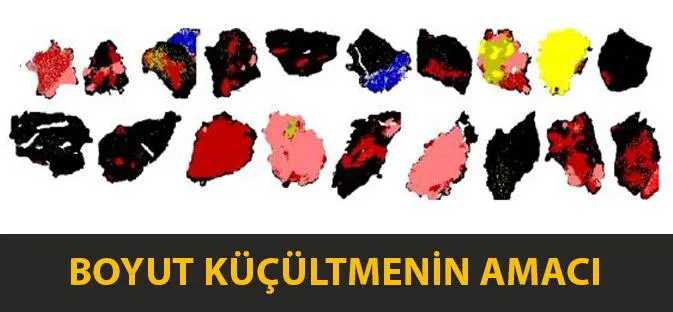
The size reduction process is carried out for three main purposes:
i. To obtain the size or surface area required for the use of the ore or material:
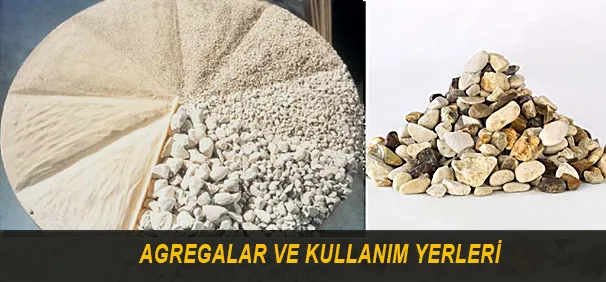
For this purpose, size reduction generally prepares the filler material needed in ceramics, road, construction and asphalt works, and the raw material to be used in cement production.

The size may be in block form, but for ores such as cement, ceramic feldspar, calcite, quartz and barite to be usable, they must be ground down to levels of 10 µ.
ii. To separate the different minerals contained in the ore, liberating one from the other:
The upper size at which grains separate from one another as a result of size reduction is defined as the liberation size.

Especially for the beneficiation of ores that occur in compound form and contain one or more valuable minerals along with unwanted impurities in their structure, the minerals that occur together must be separated from one another. In mineral processing, crushing and grinding operations are carried out for this purpose.
iii. To provide the size or surface area required by the beneficiation method to be applied:
The liberation size may not always be sufficient for the beneficiation process to be applied.

In flotation, the liberated mineral may need to be reground so that it can be carried to the surface with the froth, so that the enriched ore can be used in the next stage, or so that the produced concentrate can be enriched further.
What Is Crushing?
Crushing is the process of reducing the size of ore or rock. The size reduction process begins in the field with ore production using explosives. In the later stages, before grinding in mills, crushers are used, and this size reduction is called "crushing." Although there is no defined limit, size reduction above 3 mm is considered "crushing" and below 3 mm "grinding." Even though ore is reduced below 3 mm with cone and some impact crushers, this process is still referred to as crushing.
The size reduction process is expressed by the following transformation formula:
Ore to be reduced in size + Energy → Ore reduced in size + Sound + Heat
The net energy used in size reduction is calculated by subtracting the energy converted into sound and heat from the total energy expended. In 1964, Bake argued that the energy spent on size reduction was only 0.6% of the total energy, while Austin argued that it was less than 3%.
Although these ratios are not exact, it is a known fact that the energy spent in the size reduction process is a very small proportion of the total energy spent for this purpose.
Grinding is the final stage of the size reduction process after crushing. Grinding is carried out to liberate the different minerals contained in the ore and to provide the size and surface area appropriate for the beneficiation process or the intended use. Depending on the beneficiation process, grinding is done dry or wet, and different mills suitable for the grinding purpose are used.
Forces Applied in the Crushing Process
The size reduction process is expressed by the following transformation formula:
Ore to be reduced in size + Energy → Ore reduced in size + Sound + Heat
In the size reduction process;
- Torsion
- Compression, pressing or crushing
- Shear (cutting)
- Impact
- and collision forces are applied.
The crushing process is carried out with machines in which one or several of these forces are applied together.

In crusher machines, compression, impact and collision forces are commonly applied. Although there are no crushing machines that apply torsion and shear forces, these forces can occur during the crushing event.
In crushers where friction force is applied, the distance between the crushing hammers and the crusher-body screens is quite narrow. The ore is broken by the friction force that arises from the effect of impact and shear forces, and is removed from the system.
When ores are brittle, contain low silica, and a coarser product is aimed for as a result of crushing, crushers that work with shear force are used. Shear force is often applied together with impact and compression force.
To obtain a coarse product from hard, abrasive, hard-to-break ore that does not contain sticky material, crushers that work with compression force are used. In these crushers, the ore is compressed between two surfaces, one or both of which are moving.Jaw crushers are the most common size reduction machines used to crush these types of ore. However, there are also jaw crushers in which, in addition to compression force, friction force is applied through the horizontal movement of the jaw. These types of crushers are not suitable for crushing abrasive ores.
For controlling the top size of brittle and non-abrasive ores after crushing, closed crushing-and-screening circuits are set up. Most of the time, the first stage of crushing is done as an open circuit. After the first-stage crushing, running the pre-mill crushers in a closed circuit both makes grinding easier to manage and significantly lowers the size reduction cost.
The correct selection of crushers and crushing-and-screening circuits carries particular importance, since it directly affects subsequent mineral processing operations, above all grinding. To increase the efficiency of crushing carried out in several stages, screens are used before the crusher so that ore of a suitable size is taken out of the circuit before entering the crusher, preventing it from being reduced unnecessarily. This process also increases the capacity of the crusher and the crushing-and-screening circuits. The amount of ore to be crushed, its properties and the intended use of the crushed product are the determining factors in the selection of crushers and crushing circuits.
Properties of the Ore to Be Crushed
Every ore to be crushed has its own crushability characteristics. While some ores are easy to crush, others require more energy to break. The physical structure of the product obtained after crushing can also vary; the crushed ore may turn to dust or may remain in large pieces. Each ore, while being crushed, also wears the crusher liners by a certain amount.
The properties of the ore are decisive in crusher selection:
- The desired size after crushing, P80
- Crushing capacity, Q
- The in-situ and bulk density of the ore, ρ
- The work index Wi and the abrasion index Ai of the ore to be crushed
- The hardness of the ore
- The moisture of the ore
- Any content of the ore that could cause problems in size reduction
- The local conditions under which the size reduction is carried out
Size reduction tests to be carried out in the laboratory are important for preventing a possible wrong selection from the outset. Three important pieces of data about the breakage properties of ores — the chemical analysis of the rock, the abrasion index Ai and the work index Wi — can easily be determined by laboratory tests.
In crusher selection, the properties of the ore to be crushed are the most important determinant. The breakage properties of the same ore can also vary within certain ranges. For the selection to be made, the size of the ore, the size to which it will be crushed and its quantity must be known. At the crusher selection stage, the decision must be made by evaluating the crushing stages together with the possible factors that may arise at each stage.
The work index Wi value of ores is the most important measure of their crushability. Ores with a low work index are easy to crush and the energy required to break them is low. For ores with a high work index, the necessary crusher settings are kept high so that they do not overload the crusher.
For ores with a high abrasion index, such as quartzite, the use of impact crushers is not suitable. This is because replacing worn parts in crushing circuits and maintaining crushers is time-consuming and costly. For crushing ores with a low work index, such as dolomite, capacity comes to the fore in crusher selection. Large crushers are not required for crushing dolomite.
Internal stresses are not desired in aggregates to be used in concrete production. Even if jaw crushers have been used in the first crushing stage, impact crushers should be used in the second stage to reduce the material coming out of the jaw crusher to the size for use.

It has been determined that double-toggle jaw crushers are highly effective in crushing ores with an Ai value higher than 0.7. Gyratory and cone crushers work like double-toggle jaw crushers, and these crushers are considered low-wear crushers.
The reduction ratio of impact crushers is higher than that of jaw and cone crushers, requiring fewer crushing stages in the size reduction process. However, using impact crushers to crush ores with an abrasion index greater than 0.15 is not recommended, as it causes excessive wear.
Types of Crushers
Crushers are classified as primary, secondary, tertiary and even quaternary crushers.
Primary crushers:
- Jaw crushers
- Gyratory (rotary cone) crushers
- Impact crushers
Secondary, tertiary and quaternary crushers:
- Cone crushers
- Impact crushers
- Hammer crushers
- Vertical-shaft (autogenous) crushers
- Roller crushers
- Other crushers
MEKA GLOBAL