MEKA Prevented 38 Tons of CO₂ Emissions with Its Electric Vehicle Fleet
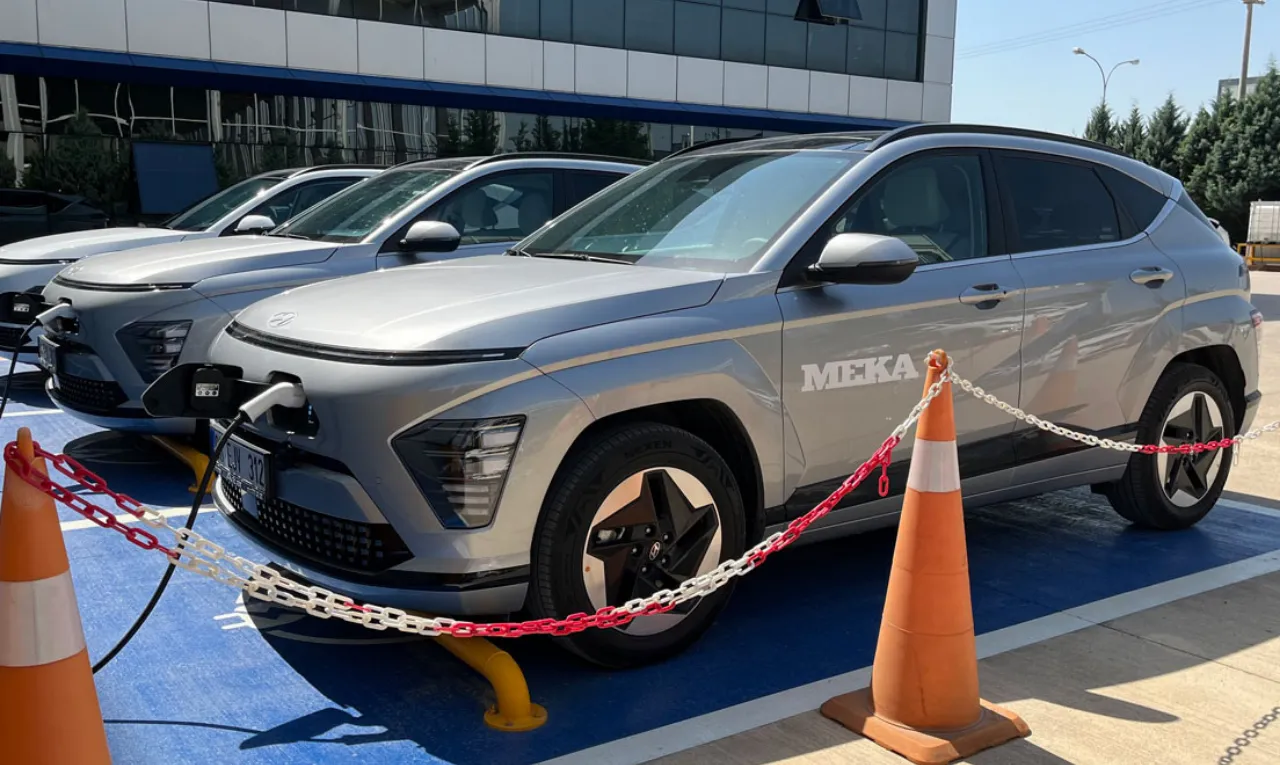
With a fleet of 7 electric vehicles covering 455,162 km, MEKA prevented approximately 38.5 tons of greenhouse gas emissions compared to diesel alternatives and achieved fuel savings exceeding TRY 1.3 million.
In line with its sustainable business model and environmental responsibility approach, MEKA is replacing diesel vehicles in its fleet with electric vehicles in order to minimize carbon emissions. As of February 2026, the fleet, consisting of 7 electric vehicles, has traveled a total of 455,162 km. The comparative analysis clearly demonstrates, with concrete data, how the transition to electric vehicles has produced significant environmental and economic benefits.
Calculation Method and Reference Data
Internationally recognized emission factors were used as the basis for the comparative carbon footprint analysis. On the diesel side, the widely used Fiat Egea model was selected as the reference vehicle (with an average diesel consumption of 6 liters per 100 km). The main parameters used in the calculation are shown in the table below:
| Parameter | Value |
|---|---|
| Number of Electric Vehicles | 7 |
| Total Distance Traveled | 455,162 km |
| Carbon Emissions per 1 L of Diesel | 2.64 kgCO₂/L |
| Carbon Emissions per 1 kWh of Electricity | 0.478 kgCO₂/kWh |
| Diesel Vehicle Consumption (Fiat Egea) | 6 L/100 km |
| Electricity Unit Price | 5.26 TL/kWh |
| Diesel Unit Price | 64 TL/L |
| Annual CO₂ Absorption of 1 Tree | 25 kgCO₂/year |
Comparison of Electric and Diesel Vehicles
The environmental and economic performance of electric and diesel vehicles for a distance of 455,162 km is compared below:
| Parameter | Electric Vehicle | Diesel Vehicle |
|---|---|---|
| Energy/Fuel Consumption | 67,069.77 kWh | 26,709.72 L |
| Carbon Emissions | 32,059.35 kgCO₂ | 70,513.66 kgCO₂ |
| Tree Equivalent (annual) | 1,282 trees | 2,820 trees |
| Total Cost | 352,786 TL | 1,709,422 TL |
The table clearly shows that electric vehicles cause more than 50% less carbon emissions than diesel vehicles for the same distance. Economically, the fuel cost of electric vehicles remains below one-fifth of diesel alternatives.
Conclusion: Prevented Emissions and Achieved Gains
MEKA’s decision to transition to an electric vehicle fleet has delivered the following concrete results as of February 2026:
| Indicator | Value |
|---|---|
| Prevented Greenhouse Gas Emissions | 38,454.31 kg CO₂ |
| Saved Tree Equivalent | 1,528 trees |
| Fuel Savings Achieved | 1,356,635 TL |
These figures prove that transitioning to electric vehicles is not only an environmental choice but also a strong economic strategy. Preventing more than 38.5 tons of CO₂ emissions is equivalent to the amount of carbon that approximately 1,528 mature trees can absorb in one year.
MEKA GLOBAL