What Is Hydration? Cement Hydration in Concrete

During concrete pouring, things don't always go as planned. Sometimes unexpected cracks appear on the surface; sometimes strength tests are disappointing. Behind the vast majority of these problems lies a single concept: hydration. So what does hydration mean?
In its simplest form, hydration is the chemical reaction process that begins the moment cement meets water. Through it, the powdered cement gradually solidifies and forms the load-bearing skeleton of the concrete. It sounds simple, doesn't it? But when you get into the details, you face dozens of variables that need to be controlled. Let's examine this process together.
Cement Hydration: The Chemical Process and Reactions
Hydration begins when cement and water are mixed and continues for days, even weeks. In fact, it is possible to say that this process never truly stops. As the minerals within the cement grains come into contact with water, they form new crystal structures; these structures interlock and the mechanical strength of the concrete emerges.
Main Components and Reaction Products
There are four main players in the structure of Portland cement: tricalcium silicate (C3S), dicalcium silicate (C2S), tricalcium aluminate (C3A) and tetracalcium aluminoferrite (C4AF). Each has a different role and reaction rate.
C3S is the most impatient one. It reacts quickly with water and is the main contributor to early strength gain. C2S is the opposite; it takes its time but, over the long term, quietly makes a big contribution to the durability of the concrete. Understanding the balance between the two is one of the cornerstones of concrete design.
As a result of these reactions, calcium silicate hydrate (C-S-H) gel and calcium hydroxide (CH) form. It would not be an exaggeration to say that C-S-H gel is the source of the concrete's strength. With its needle-like crystal structures, it fills the gaps between the cement grains and forms a hard mass. Calcium hydroxide, meanwhile, keeps the environment alkaline, protecting the reinforcing steel against corrosion.
The Heat-Releasing Nature of the Reaction (Exothermic Reaction) and Heat Control
Anyone who has poured mass concrete in the middle of summer on site knows: hydration produces a significant amount of heat. This reaction is exothermic, meaning it releases its energy as heat. In small sections this is not much of a problem, because the heat dissipates easily. But in large masses such as a dam body or a thick foundation slab, the situation changes.
The heat that accumulates inside the concrete mass creates significant temperature differences between it and the outer surface. When this difference exceeds a certain threshold, thermal cracks form. The result? Structural integrity is jeopardized.
In practice, several methods come into play: low-heat cement can be preferred, ice can be added to the mix, pouring can be scheduled for cooler hours, or the surface can be kept moist during the curing process. Mineral additives such as pozzolan and fly ash are also among the solutions frequently preferred for reducing the heat of hydration.
The Importance and Effects of Hydration in Building Materials
The hydration process determines almost all the performance properties of concrete. Setting time, early and final strength, impermeability, longevity... Behind all of them lies how healthily this chemical process proceeds.
Controlling the Setting Time of Concrete and Early Strength Gain
After cement is mixed with water, it begins to set within a certain time. This time varies depending on the type of cement, the air temperature and the admixtures. Especially if there is a long distance from the concrete batching plant to the site, managing the setting time correctly becomes critical. Concrete that sets uncontrollably inside the transit mixer is a scenario no one wants.
Early strength gain is concentrated in the first 7 days. Thanks to the rapid reaction of C3S, about 65–75% of the concrete's 28-day design strength is achieved in this short time. The timing of formwork removal, decisions to move to the upper floor, load-application plans... all of these are shaped according to the early-strength data. For this reason, paying attention to curing conditions in the first days prevents problems that are hard to remedy later.
Achieving Final Durability and Impermeability
The long-term effect of hydration should not be overlooked. The slow-paced but steady reaction of the C2S component tightens the concrete structure over the months and lowers the porosity. This in turn makes it harder for harmful substances such as water, chloride ions and sulfate to seep into the concrete.
Especially in marine structures, dams, water reservoirs and underground structures, impermeability is a vital parameter. A well-controlled hydration process can extend the service life of concrete by decades. Otherwise, early deterioration, reinforcement corrosion and structural damage become inevitable. In short, the care shown to hydration is directly reflected in the lifespan of the structure.
Quality Control Factors for Successful Hydration
The efficient progress of hydration depends on many factors, from raw-material quality to mix proportions. Two of these stand out: the water/cement ratio and aggregate quality.
The Critical Role of the Water/Cement Ratio
It is hard to find another parameter as much discussed in concrete technology as the water/cement ratio. Theoretically, water amounting to about 25% of the weight of the cement is enough for hydration to be completed. In practice, however, to ensure workability, this ratio rises to between 40% and 60%.
Excess water leads to an increase in capillary voids within the concrete and a drop in strength. Insufficient water, on the other hand, causes the reaction to remain incomplete; some of the cement grains stay idle inside the concrete without ever reacting. Both scenarios produce undesirable results. Therefore, the water/cement ratio must be calculated meticulously in the mix design and kept under tight control during pouring.
The Effect of Aggregate Quality on Hydration Efficiency
Aggregates make up 60 to 80% of the volume of concrete. The quality of a material with such a large share affects the hydration process indirectly but strongly. Dirty, overly dusty aggregates or aggregates with unsuitable grading make it difficult for the cement paste to adhere to the aggregate surface. As a result, weak bond zones form within the concrete and both strength and durability decline.
Different types of aggregate and their physical properties directly affect concrete performance. When clean, well-graded aggregates with suitable geometry are used, the hydration products form a homogeneous bond on the aggregate surface. At this point, the quality of the aggregate production process plays a decisive role.
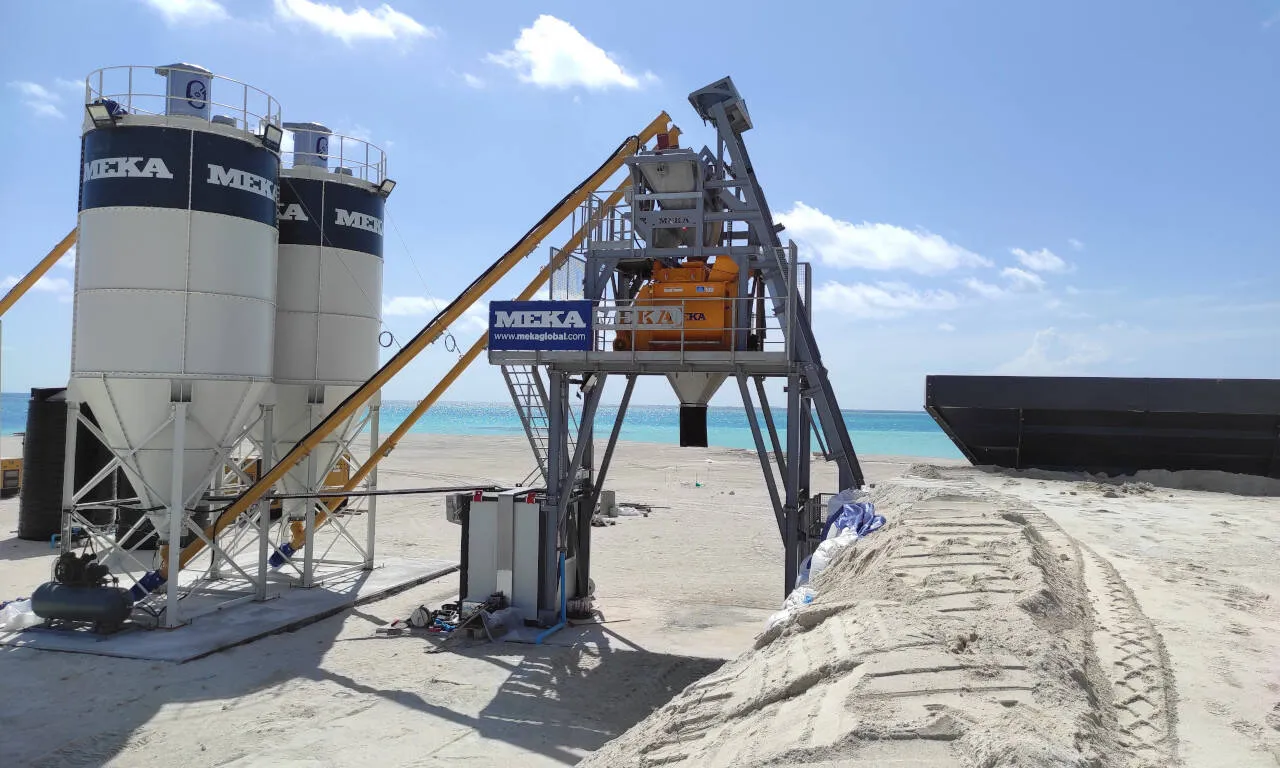
With its broad product range extending from crushing-and-screening plants to concrete batching plants, MEKA provides the infrastructure for quality aggregate production and efficient concrete preparation. The raw-material quality required for a successful hydration process begins with the right equipment selection.
Hydration is the invisible but all-determining heart of concrete production. Every decision made — from cement selection to aggregate quality, from the water ratio to curing conditions — actually shapes the course of this chemical process. Teams equipped with the right knowledge and making informed choices produce long-lasting and safe structures.
MEKA GLOBAL