EN

Advanced Stockpile Calculator

Calculation Results (Feet)

Conveyor Length: 100 ft
Maximum Pile Radius: 45 ft
Maximum Pile Height: 33 ft
Conical Pile Volume: 2,477 cu.yd
Volume for 1° Arc: 140 cu.yd
Stockpile Volume: 15,157 cu.yd

Calculation Results (Meters)

Conveyor Length: 30.48 m
Maximum Pile Radius: 13.72 m
Maximum Pile Height: 10.06 m
Conical Pile Volume: 1,894 m³
Volume for 1° Arc: 107 m³
Stockpile Volume: 11,591 m³
Stockpile Illustration

3D Stockpile Visualization

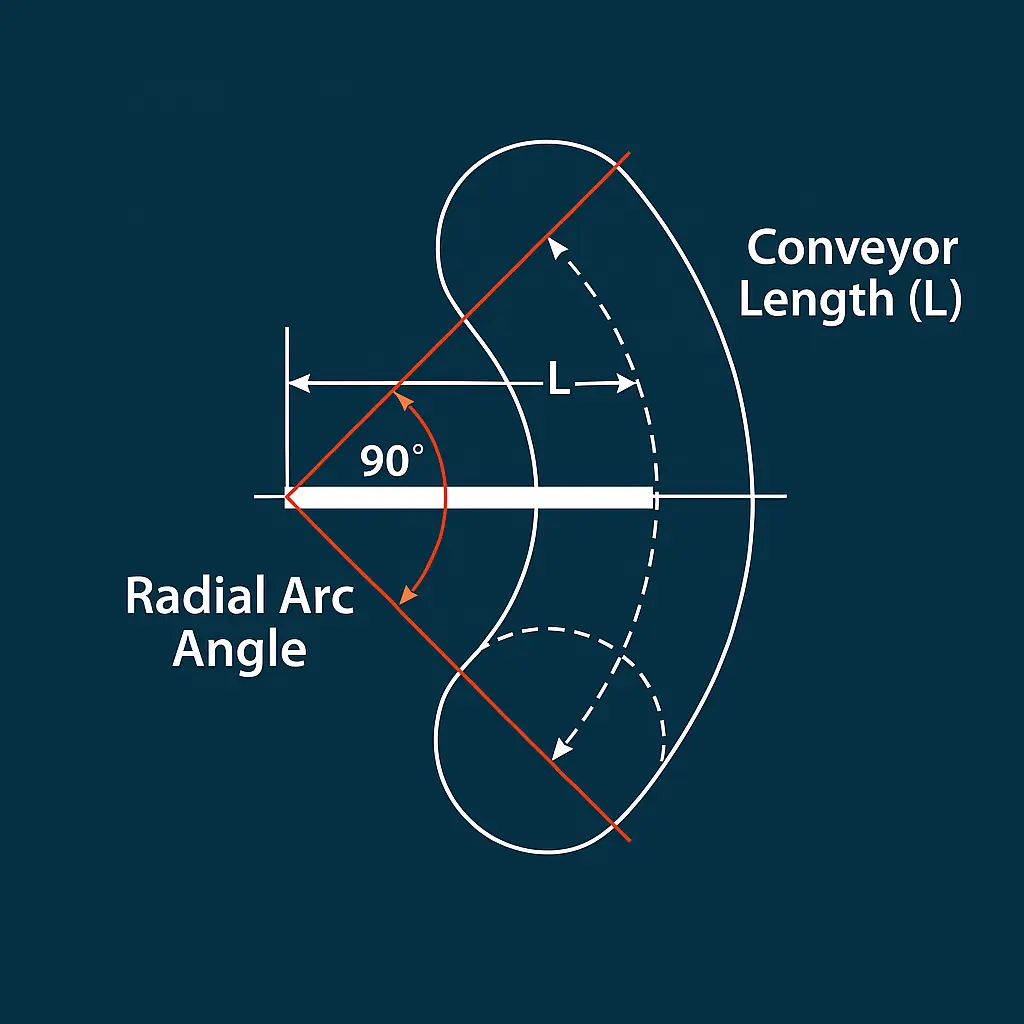
Schematic Diagram

Conveyor Stockpile Angle: θ

Calculation Information

This calculator determines stockpile dimensions based on conveyor length and radial arc angle.

Based on a conveyor set at 18° incline, with a material density of 100 pcf and a repose angle of 37°.

All meter values are calculated independently based on standard conversion factors.

MEKA Stockpile Calculator

Fast volume & tonnage estimates for conical and elongated stockpiles

Don't wait hours to make decisions on site. MEKA Stockpile Calculator is an online tool that speeds up stockpile planning for aggregate and mining operations in just a few clicks. Select the pile geometry, enter the material properties; the tool delivers instant volume and estimated tonnage outputs. It's by your side when preparing quotes, planning production or generating stock reports.

Why the MEKA Calculator?
Fast and practical: Shorten the planning cycle by getting results in seconds.

Site-ready: Supports conical, truncated cone and conveyor-fed elongated stockpile (windrow) scenarios.

Close to reality: The material's piling behavior and bulk properties are taken into account.

Decision support: Clarify decisions on raw material supply, stock turnover rate and equipment capacity.

Enterprise scalability: Ready to grow with options for multiple projects, multiple materials, brand standards and in-team sharing.

Device independent: A smooth experience on desktop and mobile.

Note: The tool is intended for preliminary design and planning; final values must be verified with on-site measurements and tests.
Who uses it?
Aggregate producers & quarries: Daily/weekly stock tracking of crushing-screening lines.

Mining operations: Volume reports for ore, intermediate product and waste stockpiles.

Ready-mix & cement: Sand, gravel and clinker stock management.

Ports & logistics: Capacity planning of bulk cargo yards.

Engineering & contracting: Quotation and survey studies.
Featured capabilities
Multiple stockpile geometries: Conical, truncated cone (frustum), conveyor-fed elongated stockpile.

Parameter-based structure: Dimensional data such as height and diameter/length, plus material properties.

Instant output: Volume and estimated tonnage; optional unit preference (metric/imperial).

Share & save: Save your projects and share them with your teammates.

Security: The calculation logic and method are MEKA's property; formulas are not shown.
How it works
1. Select the stockpile type (conical, elongated, etc.).

2. Enter your dimensions and material data.

3. Press the Calculate button; the system instantly delivers volume and estimated tonnage.

4. Add the results to a report draft or share them with your team.
Tips
• Consider the material's typical properties (e.g. moisture, grain size).

• Periodically reference actual on-site measurements (drone/total station).
Why MEKA?
MEKA simplifies production and stock management with an engineering approach that understands site reality. This tool is designed to help your teams work with faster quotes, clearer plans and lower uncertainty.
Try it now
Speed up your planning and reporting. Live demo or a quote — get in touch with us.

Frequently Asked Questions (FAQ)

How is the stockpile volume estimated?

The calculation is based on the pile geometry and the material's natural piling behavior. Formulas and proprietary methods are not displayed. The results are for planning purposes; they should be verified with on-site measurements.

Which pile types does it support?

Conical and elongated (conveyor-fed) stockpile scenarios; where needed, an estimate for flat-topped piles using a truncated-cone approach.

Which sectors can use it?

Aggregate, mining, cement, ready-mix concrete, port/logistics and EPC companies.

How accurate are the results?

It depends on the accuracy of the input data and on site conditions. Use the tool for preliminary design and planning; for critical decisions, verify on site.