What Is a Concrete Block? Applications, Performance and Advantages
What is a Concrete Block? Definition
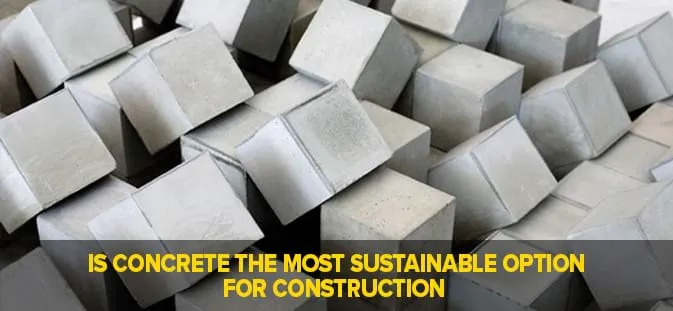
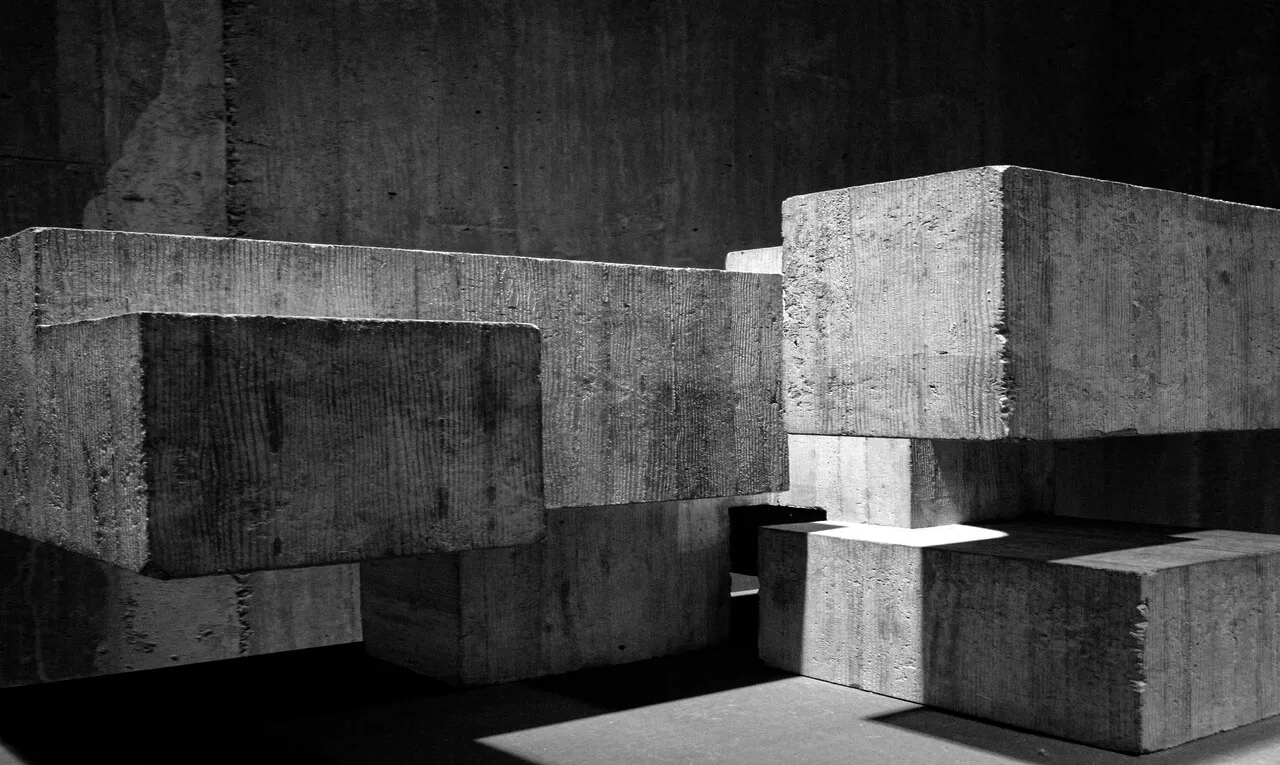
A concrete block, often called a Concrete Masonry Unit (CMU), is a modular masonry element manufactured by vibro-pressing a mix of cementitious binder, lightweight or normal-weight aggregates, water and performance admixtures. Units are commonly hollow to reduce weight and to enhance thermal and acoustic behavior.1 Standardized dimensions support repeatable, fast wall construction across a wide range of applications such as non-load-bearing partitions, infill walls, garden/perimeter walls and industrial partitions.
Depending on the manufacturer’s mix design, blocks may be lightweight (e.g., pumice-based) or normal-weight (e.g., sand-gravel/slag-based). Typical bulk density ranges from about 800 to 1800 kg/m³. The hollow geometry lowers material consumption and the wall’s unit weight while improving service performance. In the Turkish market, modules informally known as “20s” (≈190×390×190 mm), “15s” (≈140×390×190 mm) and “10s” (≈90×390×190 mm) are frequently used, though dimensions and void ratios can vary by producer.
Types of Concrete Blocks
- Pumice-based (Lightweight) Block: These are made with natural pumice, which makes them surprisingly light. They're great at blocking heat and are very easy to cut and handle on-site. You'll see them used mostly for interior partition walls and filling in frames.
- Concrete (Normal-weight) Block: This is your standard, heavy-duty block made with sand and gravel. It's much stronger and tougher, so it's the go-to choice for outdoor projects like garden walls, fences, and perimeter walls that need to stand up to the elements.
- Slag/Special Aggregate Block: Sometimes a project needs something very specific, like a certain density or extra strength. These blocks are custom-mixed with special materials to hit those exact targets.
- Geometric Variants: Blocks aren't just simple rectangles. They come in all sorts of useful shapes, like half-blocks for staggering joints, special corner pieces, and blocks with built-in channels to make running pipes and electrical conduit much easier.
Advantages of Using Concrete Blocks in Construction
- Installation speed and productivity: Concrete blocks support high on-site productivity. Their larger module means fewer pieces per square metre, which shortens laying cycles and improves execution efficiency.
- Keeps buildings comfortable: Lightweight blocks are fantastic insulators, and their hollow cores help trap air, making that insulation even more effective.2 When installed correctly, this design is great at stopping "cold spots" (thermal bridges) from forming.
- Blocks noise: The sheer weight (mass) of the blocks, combined with the hollow spaces inside, does a solid job of dampening sound. At standard thicknesses, they provide good acoustic comfort between rooms.
- Safer in a fire: Concrete blocks simply don't burn (they have a top-tier A1 fire rating). Their mineral structure and hollow design also mean they can resist fire for a significant amount of time, helping to contain it.
- Easy to work with (and less waste): You can cut or shape these blocks with basic hand tools right on site. This makes it simple to create clean openings for plumbing or electrical wiring without smashing the whole block and creating a mess.
- Good for the budget: When you add it all up, concrete blocks can be very cost-effective. The work goes faster, you use less mortar per square meter, and you need fewer blocks overall compared to smaller bricks. This all helps lower the total cost of building the wall.
Application Areas
- Residential projects: Infill and partition walls within the structural frame.
- Garden and perimeter walls: External walls used with plinths and bond beams.
- Industrial structures: Production-area partitions, warehouse divisions, fire zones.3
- Technical volumes: Spaces with acoustic and fire requirements such as shafts, mechanical rooms and generator/transformer rooms.
Brick vs. Concrete Block: Material Comparison
Values are typical; they vary with product class, thickness and project conditions.
| Criterion | Lightweight Block | Normal-weight Block | Clay Brick (Hollow) |
| Bulk Density | ~800–1200 kg/m³ | ~1500–1900 kg/m³ | ~1200–1600 kg/m³ |
| Compressive Strength (Block) | Medium | Medium–High | Medium |
| Thermal Conductivity λ (dry) | ~0.12–0.25 W/mK | ~0.40–1.00 W/mK | ~0.25–0.45 W/mK |
| Criterion | Lightweight Block | Normal-weight Block | Clay Brick (Hollow) |
| Wall Laying Speed | High | High | Medium |
| Plaster Consumption | Low–Medium | Low–Medium | Medium |
| Fire Performance | A1, Very Good | A1, Very Good | A1, Very Good |
| Workability (Cutting/Chasing) | Easy | Medium | Medium |
Comment: Lightweight blocks offer labor and thermal advantages; normal-weight blocks stand out in durability against external exposure and higher strength. Clay brick remains suitable where fine detailing and traditional workmanship are prioritized.
Application and Detailing Recommendations
- Bed and head joints: Use a mortar class compliant with TS/EN standards (e.g., M5). Typical bed-joint thickness is 10 mm; head joints must be full and continuous.
- Bonding: Provide a running bond with at least 1/3, preferably 1/2, block overlap.
- Connection to the structural system: Use stainless connection straps, anchored wall ties or mechanical connectors rather than friction against column/shear-wall surfaces.
- Horizontal bond beams: Reinforced bond beams at floor levels improve in-plane stiffness and seismic behavior; open voids should be integrated with the beam.
- Supporting Doors and Windows: Any time you have an opening, you need a strong lintel (pre-made or reinforced concrete) sitting on top. Critically, make sure the lintel rests on a good, solid portion of the wall on both sides—don't leave it short.
- Keeping Water Out: This is crucial for exterior walls. Use a water-repellent plaster or coating. Double-check that all mortar joints (especially the vertical ones) are completely full, so water can't sneak in. And always, always have proper waterproofing where the wall meets the foundation.
- Stopping Cold Spots (Thermal Bridges): Cold can travel through solid materials. Pay close attention to corners and where walls join concrete columns. Keeping your vertical mortar joints full is key. This is especially important when you're also using an exterior insulation system (ETICS) to create a continuous thermal barrier.
- Boosting Sound Insulation: If you need serious soundproofing (like for a home theater or between apartments), a standard block wall might not be enough. The best approach is to build two separate block walls (a double-leaf wall) with a small gap, add a flexible acoustic layer in between, or build each wall on its own frame so they don't touch and transfer vibrations.
- Service penetrations: Do not remove webs without approval; obtain project authorization if the unit’s cross-section must be reduced.
Typical Technical Data
Representative values; consult the product TDS and relevant standards for design.
| Parameter | Lightweight Block (Pumice) | Normal-weight Block |
| Nominal Size (Example) | 190×390×190 mm | 190×390×190 mm |
| Void Ratio | 30–55% | 25–45% |
| Bulk Density | 800–1200 kg/m³ | 1500–1900 kg/m³ |
| Dry Thermal Conductivity λ | 0.12–0.25 W/mK | 0.40–1.00 W/mK |
| Fire Class | A1 | A1 |
| Typical Wall Thickness | 100 / 150 / 200 mm | 100 / 150 / 200 mm |
Frequently Asked Questions (FAQ)
- Can a concrete block wall be load-bearing?
Generally no; CMU walls are used as infill or partitions within a frame. If load-bearing performance is required, design, testing and standard compliance are mandatory.
- Is it suitable for exterior walls?
Yes, with appropriate plaster/coating, waterproofing and thermal-insulation details. Protect surfaces against freeze–thaw and precipitation.
- How do I select the mortar class?
Consider function, exposure and block strength. M5 is typical for residential partitions; higher classes may be needed for exterior or higher loads.
- What matters for sound insulation?
Mass and continuity. Ensure full joints; improve with double-leaf walls and a cavity or flexible interlayer.
Conclusion
Concrete blocks meet modern site needs with modular geometry, rapid installation and mineral composition. Selecting lightweight or normal-weight units to match project targets allows optimization of thermal, acoustic and fire performance. Proper detailing and quality control determine long-term service life and reliability.
MEKA GLOBAL